


There’s a specific kind of freedom that comes with hitting the trail. But whether you’re heading out for a quick two-hour loop or a long, ambitious trek, the difference between a great day and a disaster usually comes down to one thing: your backpack.
- 1. Navigation (Don’t Trust Your Phone Alone)
- 2. Headlamp (Even If You Plan to Be Back by Noon)
- 3. Sun Protection
- 4. First Aid (Focus on Your Feet)
- 5. A Basic Repair Kit
- 6. Fire Starter
- 7. Emergency Shelter
- 8. Extra Food and Water
- 9. Extra Layers (The “Just in Case” Jacket)
- 10. A Way to Call for Help
- The Bottom Line
New hikers often make one of two mistakes: they either pack nothing because the trail looks easy, or they pack for a three-day expedition because they’re worried about everything.
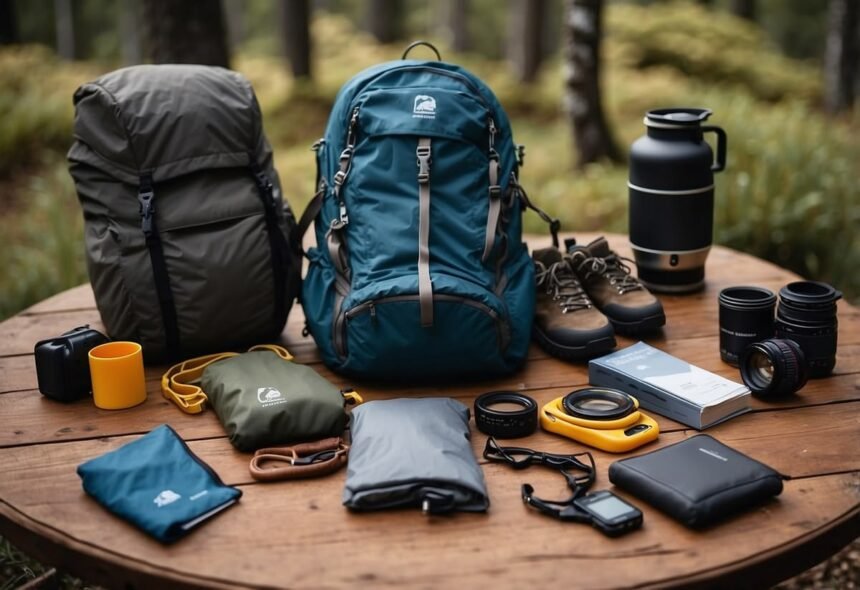
The middle ground is a system called the “Ten Essentials.” It’s not about being paranoid; it’s about having a “just-in-case” kit that fits in your bag without weighing you down. Here is the gear you actually need to carry to stay safe and comfortable.
1. Navigation (Don’t Trust Your Phone Alone)
We all love GPS apps, but batteries die and cell towers disappear the second you drop into a canyon.
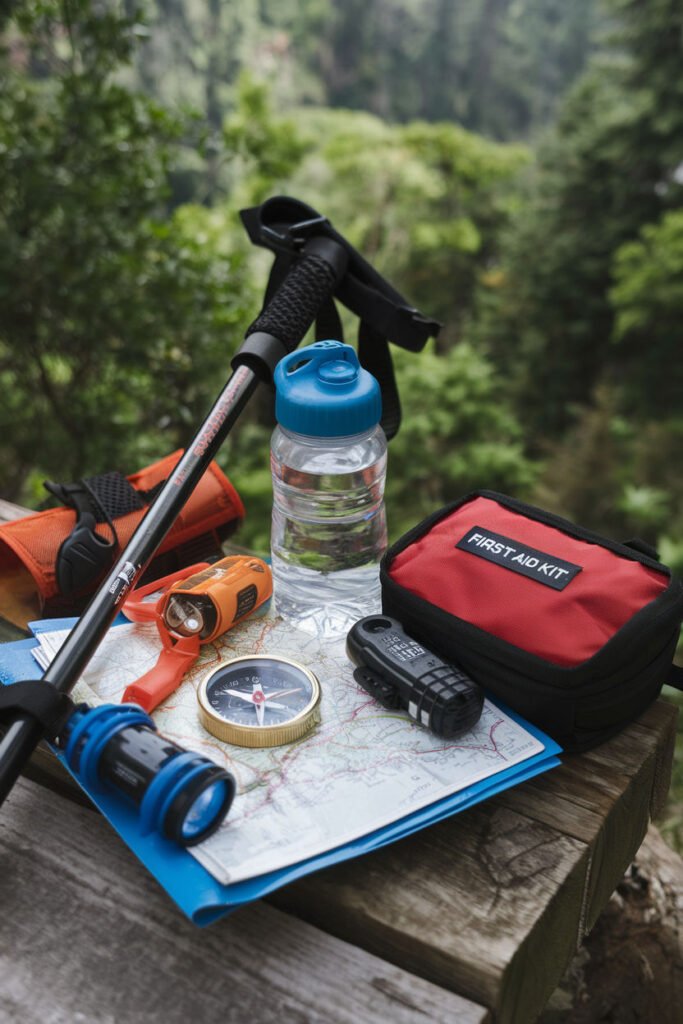
- What to pack: A physical trail map and a compass.
- The reality: You don’t need to be an orienteering expert, but you should know how to look at a map and orient yourself if you lose the trail. If you prefer tech, keep a physical backup and a portable power bank.
2. Headlamp (Even If You Plan to Be Back by Noon)
The most common search-and-rescue calls happen because someone underestimated their pace and got caught on the trail after dark.
- What to pack: A real LED headlamp with fresh batteries.
- The reality: Your phone flashlight is a joke—it’s dim, drains your battery, and forces you to use one hand. A headlamp gives you a bright, hands-free beam that makes walking in the dark infinitely safer.
3. Sun Protection
It sounds obvious, but at higher altitudes, the sun is surprisingly aggressive. Even on a cloudy day, reflected light from rock or snow can give you a nasty burn.
- What to pack: Sunscreen, lip balm with SPF, polarized sunglasses, and a hat.
4. First Aid (Focus on Your Feet)
You don’t need a full trauma kit. You need a “blister kit.”
- What to pack: A few Band-Aids, some antiseptic wipes, pain relievers, and—most importantly—moleskin or Leukotape.
- The reality: A hot spot on your heel can turn into a bleeding blister in two miles. If you catch it early and tape it, you can keep walking. If you ignore it, your hike is effectively over.
5. A Basic Repair Kit
Things break. Poles snap, straps rip, and shoe soles peel off.
- What to pack: A multi-tool and a few feet of duct tape wrapped around your trekking pole or water bottle.
- The reality: Duct tape can fix almost anything—from a hole in your rain jacket to a blown-out boot sole. It’s the ultimate “MacGyver” tool for the woods.
6. Fire Starter
You aren’t trying to build a bonfire, but you need a reliable way to get a flame going if you’re stranded and the temperature drops.
- What to pack: A windproof lighter and a few cotton balls soaked in petroleum jelly tucked into a small Ziploc bag. They light instantly, even in damp conditions.
7. Emergency Shelter
If you get stuck outside overnight, you need to prevent hypothermia.
- What to pack: An ultralight Mylar emergency blanket (the crinkly silver kind).
- The reality: They cost five dollars, weigh almost nothing, and take up the space of a candy bar. It’s the cheapest “insurance policy” you’ll ever buy.
8. Extra Food and Water
Always pack for the “unexpected hour”—the time you didn’t plan on spending on the trail.
- What to pack: Calorie-dense snacks (nuts, jerky, energy bars) and a way to filter water (like a LifeStraw or purification tablets).
- The reality: Don’t rely on finding water at the trailhead. Be able to pull water from a stream if you run dry.
9. Extra Layers (The “Just in Case” Jacket)
Mountain weather is notorious for changing the moment the sun dips behind a ridge.
- What to pack: A lightweight, packable rain shell and an extra fleece or puffy jacket.
- The reality: Even if it’s 80°F at the start, it can be 50°F at the summit. Being able to throw on a dry layer can be the difference between a fun finish and a miserable, shivering trek back.
10. A Way to Call for Help
In remote areas, your phone is a paperweight.
- What to pack: If you hike off-grid often, a satellite messenger (like a Garmin inReach) is the gold standard. If you stick to popular trails, at least carry a loud emergency whistle. Sound carries much farther than a human voice.
The Bottom Line
Packing the Ten Essentials isn’t about being scared—it’s about being prepared so you can actually relax. When you know you’re ready for a minor mishap, you can stop worrying and actually enjoy the view.