


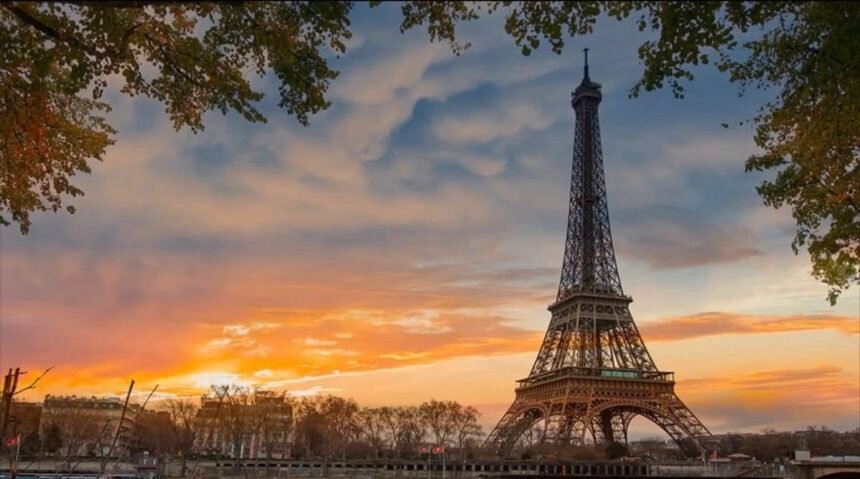
Northwest France does not reward passengers. It rewards drivers — people willing to turn off the motorway onto a coastal D-road at a moment’s notice, to stop because a village on a hillside looked worth investigating, to stay an extra night somewhere they hadn’t planned to stay at all. The Normandy-to-Brittany corridor is one of the finest road trip routes in Europe precisely because its most rewarding moments are not in the guidebooks. This is how to drive it properly — with enough structure to see everything that matters, and enough room to stop for everything you didn’t expect.
Where to Begin: Rouen — France’s Most Underestimated City
Most itineraries begin in Paris, and there is nothing wrong with that. But Rouen, two hours northwest of the capital along the Seine, is an argument for starting somewhere more interesting. The city’s old quarter is a concentration of well-preserved half-timbered houses and crooked medieval lanes that very few international tourists bother to navigate — which means you have the place largely to yourself. Joan of Arc was burned at the stake here in 1431, and the memorial square where it happened sits at the heart of a city that wears its turbulent history with unusual dignity. Spend a day here before the coast takes over.
The Alabaster Coast: Étretat and Honfleur
The Normandy coastline begins in earnest at Étretat, where chalk sea cliffs of extraordinary scale rise directly from the English Channel — the same formations that inspired Monet and Maupassant and remain genuinely arresting in person. Walk the clifftop paths for the full visual impact, and plan your visit for morning when the light is best and the coach-party arrivals are thinnest. From Étretat, drive south to Honfleur: a seductive Norman port that has always attracted painters, with a municipal museum evoking Honfleur’s artistic past through works by Boudin, Dufy, and Monet, and the 15th-century church of Sainte Catherine — the largest surviving wooden religious building in France. Spend the night here. The harbour at dusk is exactly what France’s Atlantic coast is supposed to look like.
The D-Day Coast: Bayeux, Omaha Beach, and the American Cemetery
No road trip through Normandy can bypass its most historically significant stretch of coastline. Base yourself in Bayeux — home to the extraordinary 11th-century tapestry depicting the Norman Conquest in remarkable, almost cinematic detail — and use it as a launch point for the D-Day beaches. Omaha Beach, the American Cemetery at Colleville-sur-Mer, and the Pointe du Hoc remain among the most emotionally powerful historical sites in Europe. Allow a full day here, and approach it without a schedule. These are not places to rush.
The Pivot Point: Mont-Saint-Michel
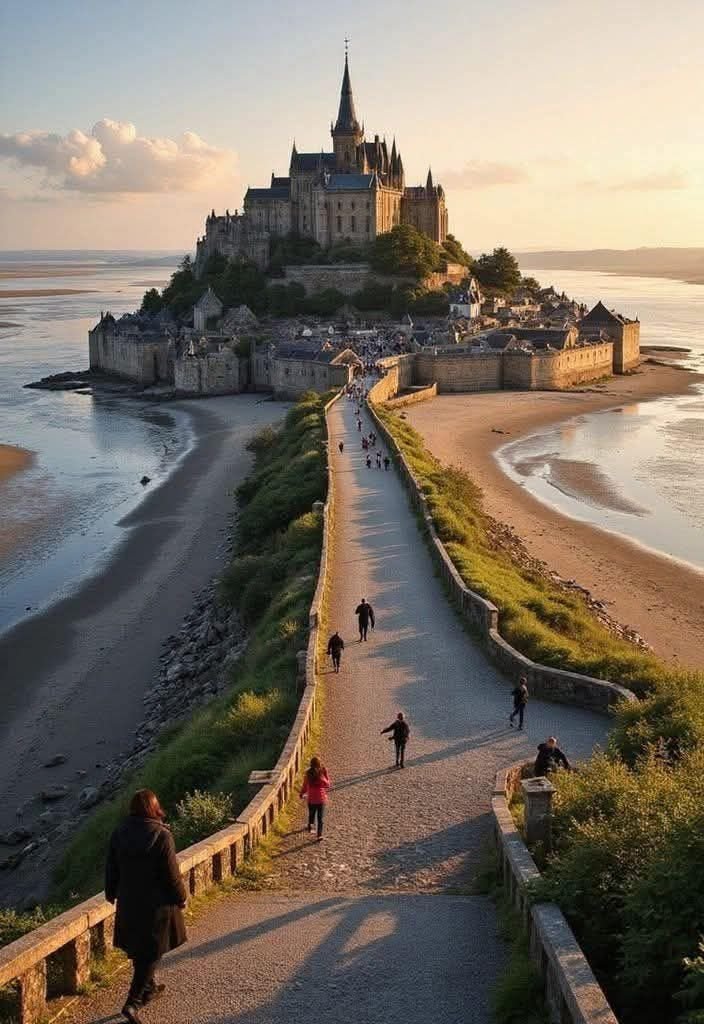
Mont Saint-Michel, on the border of Normandy and Brittany, is one of France’s most iconic landmarks, perched on a tidal island with over a thousand years of history — a UNESCO World Heritage Site attracting over three million visitors each year with its Gothic and Romanesque architecture and its extraordinary bay views. Admission to the abbey at the summit costs €16 in 2026, and the route up winds through a narrow, steep lane of stone steps. Arrive early — ideally at opening — and stay to watch the tide return across the bay in the afternoon. One important note for summer 2026: the abbey is reportedly due to close temporarily from 1 June for operational reasons, so check the official website before you go.
Into Brittany: Saint-Malo and Cancale
Cross into Brittany and make for Saint-Malo — a walled coastal city with a fascinating corsair past and striking fortifications, once a base for privateers, now drawing visitors eager to explore the old city’s stone ramparts and sample the region’s fresh seafood. Walking the ramparts — known as Les Remparts — is the essential experience here: on one side, the narrow streets of the old town; on the other, the full Atlantic. Only a 20-minute drive from Saint-Malo, Cancale is famous for its oyster beds and picturesque harbour — and eating freshly harvested oysters at a harbourside stall with a glass of Muscadet is the most satisfying and affordable meal this entire road trip produces.
Dinan: The Medieval Town Worth an Extra Night
Dinan is the inland stop that most road trippers either skip or visit on a half-day and regret not staying longer. The medieval walled town sits above the Rance river on a promontory, its cobblestone streets lined with 15th-century timber-framed houses that have been astonishingly well preserved. It is quieter than Saint-Malo, more authentic than Mont-Saint-Michel at peak hour, and rewards the traveller who stays long enough to eat dinner in the old town and walk the ramparts in the evening when the day visitors have left.
The Pink Granite Coast: Ploumanac’h and Perros-Guirec
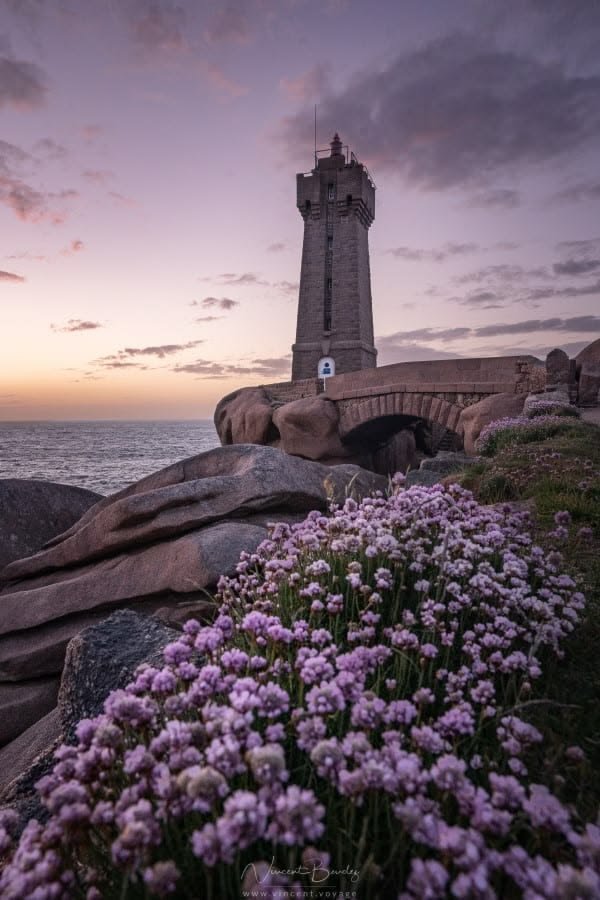
Northwest Brittany’s coastline takes a dramatic geological turn around Perros-Guirec, where enormous rose-pink granite boulders line the shore in formations so improbable they look deliberately arranged. The coastal walking path between Perros-Guirec and Ploumanac’h — known as the Customs Officers’ Path — is one of the finest short coastal walks in all of France, taking approximately two hours and delivering a view around every headland that justifies the entire detour.
South Brittany: Carnac, the Golfe du Morbihan, and Vannes
Carnac is home to the world’s largest concentration of megalithic monuments — more than 3,000 standing stones arranged in long parallel rows, dating back over 6,000 years. Nobody knows for certain why they were put here, and that lingering mystery gives the place an extraordinary, otherworldly atmosphere. Since 2025, Carnac has been inscribed as a UNESCO World Heritage Site and strict new visitor rules apply: from April to September, walking freely among the stones is prohibited, and access is only possible on guided tours. Book in advance. From Carnac, head to Vannes and explore the Golfe du Morbihan — which means “little sea” in Breton — a sheltered inland sea dotted with islands and the most beautiful sailing water in Brittany.
When to Go and What It Costs
The shoulder season — late May through mid-September — offers the best combination of comfortable temperatures and manageable crowds. That said, Atlantic winds and sudden rain showers can catch you out even in August. Be very careful around early June, when the commemorations for the D-Day landings take place — hotels across Normandy sell out months in advance. Budget around €1,200–€1,500 per person for ten days including accommodation and car hire. Driving the smaller D-roads rather than the motorways adds time but reveals a version of this landscape that the autoroute entirely misses — and missing it would be the real cost.