




There’s a moment every mobile gamer knows well. You’re three levels deep, your resources are almost gone, the battle pass is expiring tonight, and the top-up screen appears. Ten seconds later — if you’re lucky — you’re back in. No loading spinner. No redirected browser tab. Just a tap, a confirmation, and you’re playing again.
That seamlessness didn’t happen by accident. And it’s about to get a whole lot more interesting.
The money is absolutely pouring in — just not the way you’d expect
Mobile gaming revenue crossed $108 billion globally in 2025. Pause and read that again. Not the entire gaming industry — just mobile. And the numbers for 2026 are already tracking higher, with global mobile gaming revenue projected to hit around $98 billion in the US alone.
But here’s the twist nobody saw coming: the players spending money are actually spending less individually, while the platforms are somehow making more. Gen Z gamers — the generation that grew up with smartphones glued to their hands — cut their weekly gaming budgets by roughly 25% last year while logging the same or more playtime. They’re not leaving. They’re just getting smarter about where their money goes.
This shift is forcing the entire top-up and digital purchase ecosystem to reinvent itself. Fast.
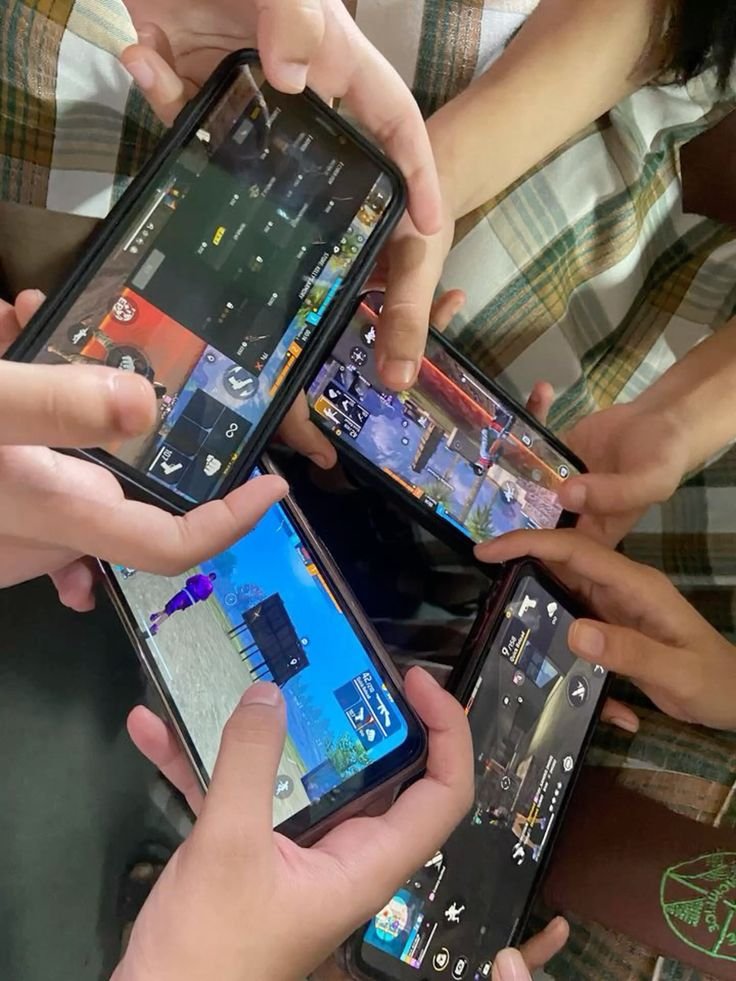
Payments are becoming invisible, and that changes everything
The biggest change happening in mobile gaming right now isn’t a new game mechanic or a flashier battle pass. It’s payment infrastructure — and most players don’t even notice it’s happening, which is exactly the point.
In India, UPI has quietly become one of the most dominant forces in the mobile gaming economy. With over 228 billion transactions processed in 2025 alone and a daily average approaching 700 million transactions, UPI-integrated top-ups mean that a 12-year-old in Pune and a 28-year-old developer in Bangalore are both recharging their game accounts in under three seconds. No card details. No CVV codes. Just PhonePe, Google Pay, or Paytm — apps they already live inside.
Brazil has Pix. Thailand has PromptPay. Southeast Asia has GCash dominating across borders. What all of these have in common is that for Gen Z players, they’re not “payment alternatives.” They’re simply how money moves. If a gaming platform doesn’t support them, it doesn’t really exist for that audience. As one payments analyst bluntly put it — if checkout doesn’t support local wallets, conversion just drops.
The emerging market surge nobody’s talking about enough
While markets like the US and Western Europe saw relatively flat growth in mobile gaming spending, countries like Turkey, Mexico, and India posted consumer spending jumps of 21–28% in 2024. These aren’t footnotes. They’re the story.
What’s driving it isn’t just more players — it’s better access to payment infrastructure. When topping up a game account becomes as easy as splitting a restaurant bill over UPI, the psychological barrier to spending disappears. A ₹79 top-up stops feeling like a financial decision and starts feeling like nothing, because the friction is gone.
Developers who are figuring this out — building regional payment flows from day one rather than bolting them on later — are the ones quietly cleaning up in markets that bigger studios are still treating as secondary.
What’s coming next: smarter spending, not just faster spending
Cryptocurrency is entering the picture, but not in the flashy, speculative way it tried to before. Stablecoins — USDT, USDC — are gaining traction in gaming transactions specifically because they offer the speed of crypto without the volatility that made the first wave of blockchain gaming such a mess. Players in regions with unstable currencies or limited banking access are already using them not as a novelty, but as a practical workaround.
AI is also reshaping how top-ups are timed and presented. Platforms are increasingly using behavioural data to surface offers at the exact moment a player is most likely to convert — not in an aggressive, dark-pattern way, but often just by timing a discount right before the natural “should I quit or push forward?” moment. It sounds clinical. In practice, it just feels like the game knows you.
The bottom line for players and the industry alike
The future of mobile gaming purchases isn’t about flashier storefronts or bigger bundles. It’s about removing every remaining reason to hesitate. Every extra tap, every unfamiliar payment screen, every two-day processing window is a player who doesn’t top up.
The platforms that win the next five years won’t necessarily have the best games. They’ll have the smoothest path from “I want to spend” to “I just spent” — and a growing number of players around the world will barely remember making the decision at all.
Which, depending on how you feel about it, is either the most impressive feat in consumer technology or the most important reason to keep track of your gaming budget.
Are you topping up more or less than you were a year ago? And which payment method do you actually trust? Drop it in the comments — we read all of them.