


The living room is the most publicly visible room in any home — the space that receives guests, frames daily life, and carries the most design expectations per square foot of any room you own. Yet it is also the room most likely to drift into a dated, disjointed, or unloved state without a deliberate refresh. The good news in 2026 is that the most compelling design direction in global interiors is not expensive minimalism or showroom-grade perfection — it is warmth, personality, and practicality. As interior design trends continue to shift away from pure aesthetics and toward how a space feels, this year’s living room ideas prioritise liveable comfort and personality-led design. Here is how to achieve exactly that, at every budget level.
- Start With Colour: Warm Neutrals Are the New Foundation
- Invest in Texture, Not Just Colour
- Rethink Your Lighting Immediately
- Mix Wood Tones Rather Than Matching Them
- Anchor the Room With a Statement Rug
- Introduce Curves to Soften the Space
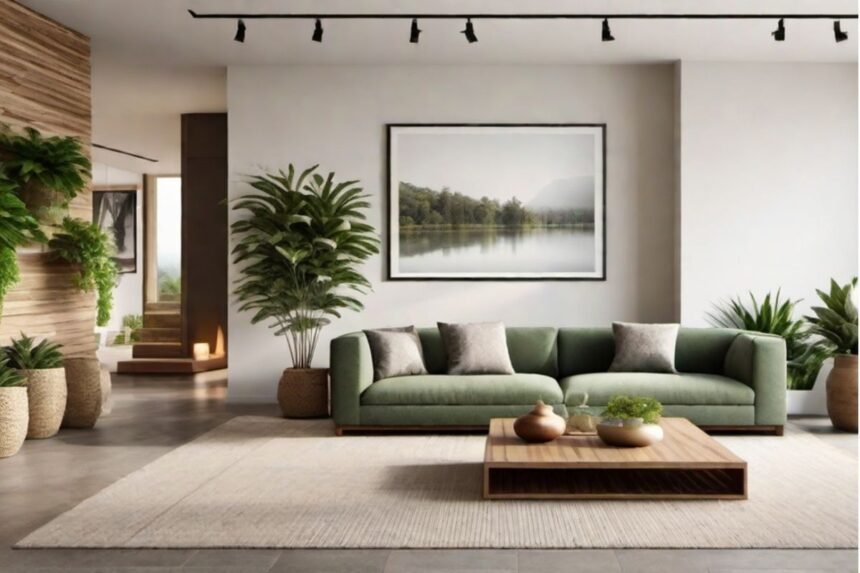
- Add Living Elements: Plants and Natural Materials
- Build a Room That Feels Personal, Not Staged
Start With Colour: Warm Neutrals Are the New Foundation
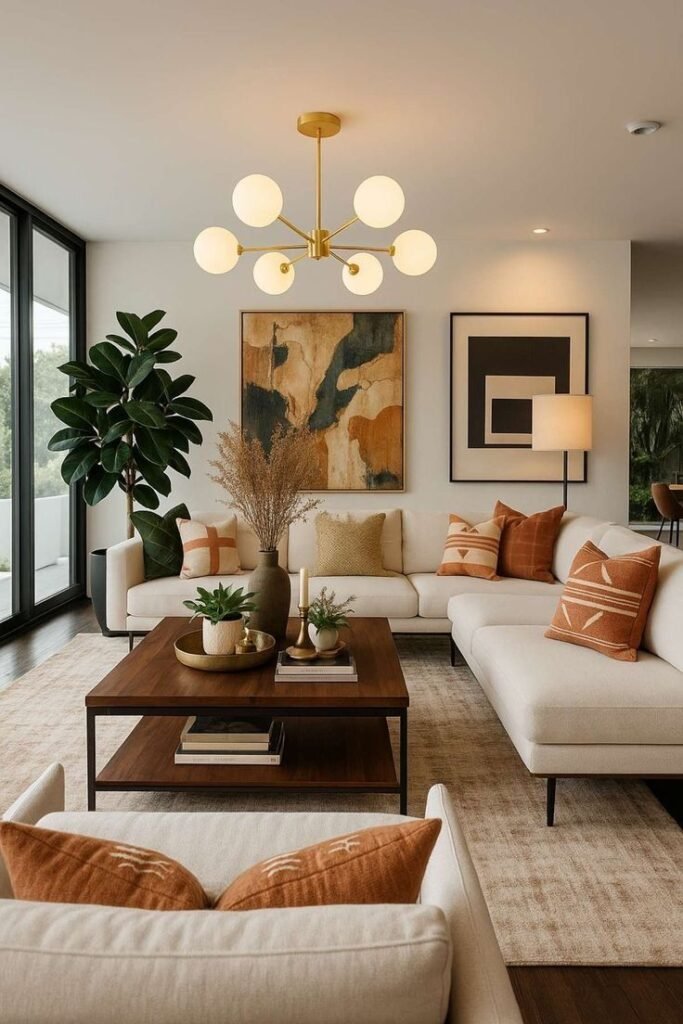
The era of cool grey and stark white as default living room backdrops is effectively over. Warm neutral colours are replacing cool grays and stark whites in 2026 — shades like mushroom, soft beige, and warm taupe create a calm yet inviting foundation that makes the room feel brighter during the day and cosier in the evening, pairing beautifully with natural wood and textured fabrics. For anyone working on a limited budget, a single tin of warm-toned paint is among the highest-impact, lowest-cost interventions available. Paint the walls first — and consider extending that tone to the ceiling for a colour-drenched effect that professional designers are using to make smaller rooms feel cocooned and intentional rather than cramped.
Invest in Texture, Not Just Colour
High-shine surfaces are not in favour in 2026 — this year focuses on finishes that feel tactile and organic. Linen upholstery, unfinished wood, stone accents, and woven textures create a grounded look that feels relaxed rather than overly styled, reflecting a growing preference for interiors that feel calm and timeless. Budget-friendly routes into texture include swapping synthetic cushion covers for linen or cotton alternatives, introducing a woven storage basket that doubles as décor, or adding a jute or wool rug beneath the coffee table. These are small investments that shift the room’s character considerably.
Rethink Your Lighting Immediately
Overhead lighting alone is the fastest route to a flat, uninspiring living room. Layered lighting makes any room feel more expensive and comfortable — combining table lamps, floor lamps, wall sconces, and dimmable overhead lights allows you to adjust the mood throughout the day, with warm lighting especially important for creating a cosy evening atmosphere. For a budget-conscious approach, a single well-chosen floor lamp or a pair of matching table lamps transforms the room’s atmosphere in the evening more effectively than any furniture purchase. The fixture itself does not need to be expensive — the warmth of the bulb temperature and the layering of light sources is what produces the effect.
Mix Wood Tones Rather Than Matching Them
The instinct to match all wood finishes in a room is one of the most common design habits worth breaking. Mixing wood tones is one of the biggest living room trends in 2026 — combining light oak with walnut or ash adds depth and character to the space, prevents the room from feeling flat, and keeps the look modern and collected rather than staged. In practical terms, this means that mismatched secondhand furniture — a walnut coffee table beside a light oak shelving unit — is not a compromise; it is currently the design ideal. Thrift stores and online resale platforms are the natural home of this approach, delivering genuine character at a fraction of new furniture pricing.
Anchor the Room With a Statement Rug
A well-chosen rug is the single most transformative budget-friendly purchase available for any living room. Coffee tables are taking on a stronger visual role in 2026, and larger, more textured options in organic materials like woven bases or natural wood tops anchor the room while providing a functional centrepiece. The same principle applies to rugs — a large, textured rug laid under the sofa and coffee table defines the seating zone, adds warmth underfoot, and ties disparate furniture pieces into a cohesive composition. The rule to follow: size up. A rug that only sits under the coffee table makes the room feel smaller; one that extends under the front legs of all seating makes it feel considered and spacious.
Introduce Curves to Soften the Space
In 2026, curved furniture shapes are continuing to gain popularity — sofas, armchairs, tables, and even shelving with rounded edges help soften a room visually, pairing well with natural materials and making them a versatile addition to modern living rooms. If a curved sofa is outside the budget, a round coffee table, a curved accent mirror, or a circular pendant light introduces the same softness at a fraction of the cost. The principle is about breaking the visual dominance of straight lines and right angles — which any round object achieves effectively.
Add Living Elements: Plants and Natural Materials
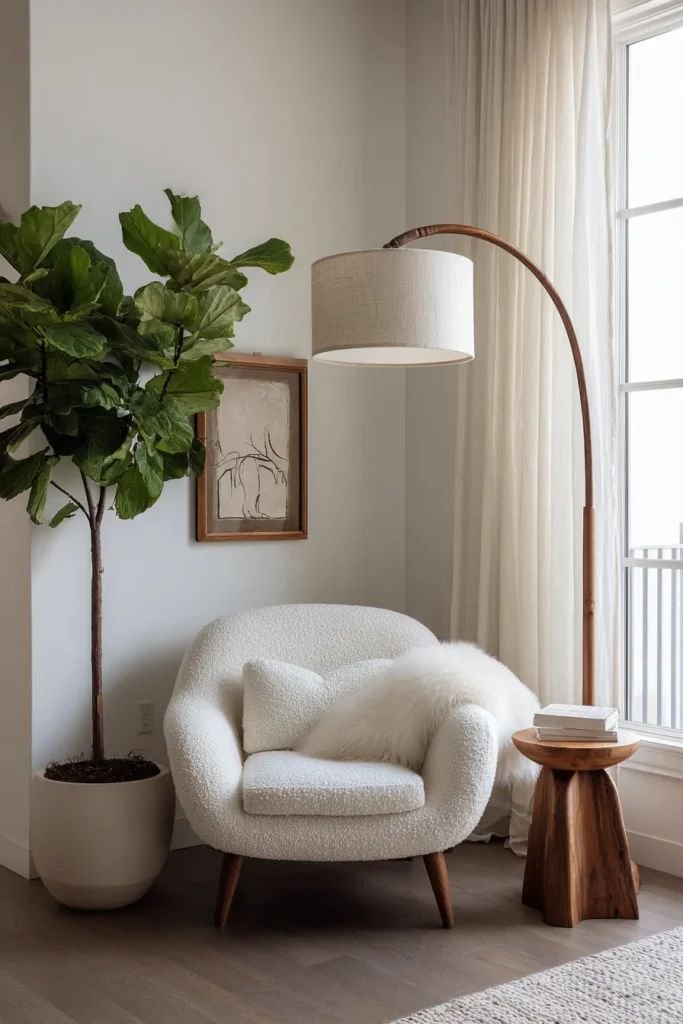
The 2025–2026 living room trends include biophilic design with abundant plants and sustainable vintage pieces as dominant features — and the practical cost is minimal. A single large-leafed plant in a corner, a terracotta pot on a shelf, or trailing greenery near a window introduces a living quality that no decorative object can replicate. Plants add scale, colour, and a sense of care to a room with almost no financial investment, and they remain the most reliably impactful décor update available regardless of budget.
Build a Room That Feels Personal, Not Staged
The biggest shift in 2026 is toward rooms that feel personal and lived-in — filling your space with items you love rather than following strict trends, with books, art, and meaningful objects making the room feel authentic. A gallery wall assembled from personal photographs in second-hand frames, a shelf of books genuinely read and loved, or a collection of objects brought back from travels — these cost almost nothing and produce a room with more character than any showroom arrangement. Style, ultimately, is not the sum of what you spend. It is the coherence of what you choose.