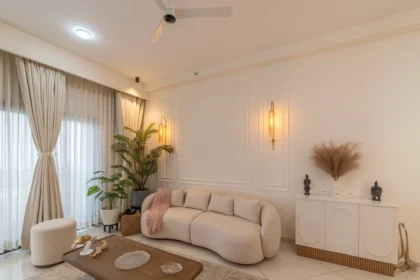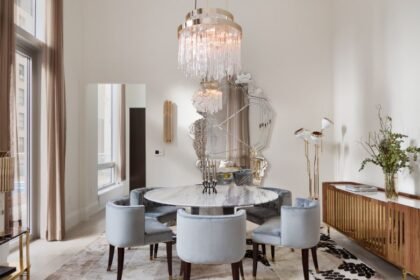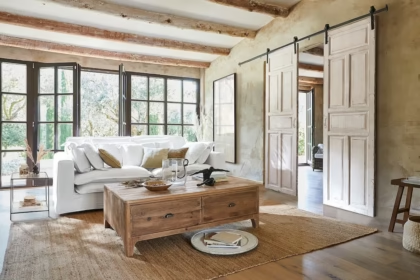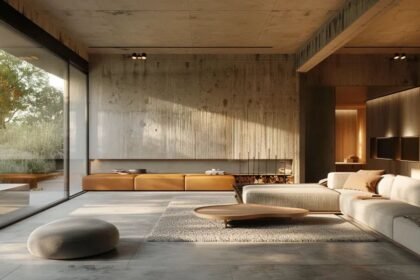



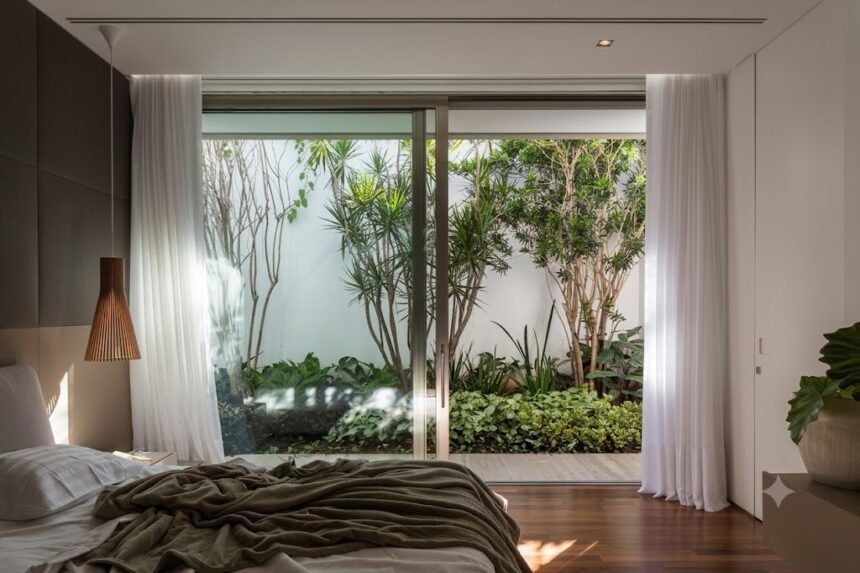
A small bedroom is not a design problem — it is a design constraint, and constraints have always produced the most creative solutions. The bedroom trends dominating 2026 prove it conclusively: interior designers are leaning into compact proportions rather than fighting them, using clever spatial thinking, warm material choices, and layered functionality to turn tight square footage into rooms that feel cohesive, generous, and deeply personal. Whether you are working with a city apartment, a guest room, or a compact primary bedroom, these ten ideas deliver real, measurable impact.
- 1. Build Vertically, Not Outward
- 2. Choose a Platform or Storage Bed
- 3. Use Mirrors Strategically, Not Decoratively
- 4. Embrace Colour Drenching
- 5. Hang Curtains High and Wide
- 6. Choose Furniture With Exposed Legs
- 7. Turn Alcoves and Awkward Corners Into Assets
- 8. Invest in Statement Lighting
- 9. Add Wallpaper to Define and Distinguish
- 10. Keep the Floor as Clear as Possible
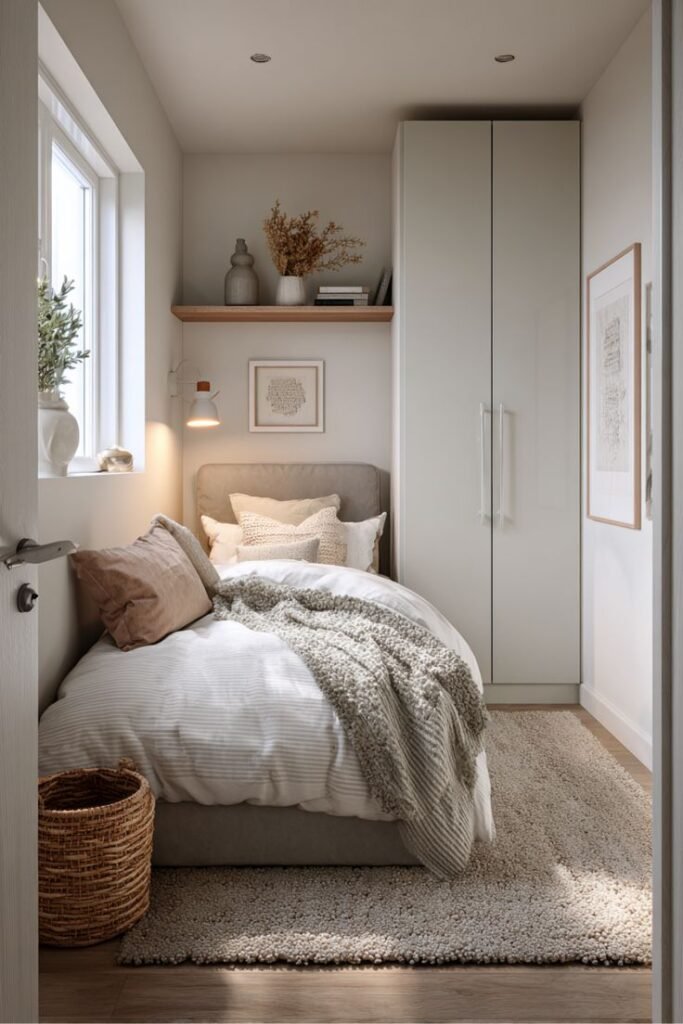
1. Build Vertically, Not Outward
Floor space is finite; wall height is almost always underused. Installing floor-to-ceiling shelving, cabinetry, or a built-in wardrobe draws the eye upward, makes ceilings feel taller, and adds significant storage capacity without consuming a single extra square foot of floor area. Every inch is valuable in a small space, so installing seamless storage solutions that don’t compromise your interior design style is a trend that will always be relevant, in 2026 and forever. Vertical built-ins anchored in a single wall give the entire room a tailored, intentional finish that freestanding furniture cannot replicate.
2. Choose a Platform or Storage Bed
The bed is the largest object in any bedroom, and in a small room it needs to earn its keep twice over. Platform beds with integrated drawer storage underneath eliminate the need for a separate chest of drawers entirely. Murphy beds — which fold flush against the wall — go further, converting the bedroom into a fully functional daytime space when sleeping hours are done. Multifunctional furniture may be among the most practical small bedroom ideas for maximizing space — a daybed, futon or Murphy bed can be converted for several uses throughout the day and evening.
3. Use Mirrors Strategically, Not Decoratively
Mirrors do not merely add decoration — they manipulate light and perceived depth in ways that meaningfully change how a room feels. Oversized mirrors could have a tremendous impact on a small bedroom — similar to painting walls a light color, mirrors reflect natural light, especially when facing a window, giving the illusion of a brighter, larger space. Mirrored backsplashes, panelling, and ceilings have long been used to create the illusion of more space in tighter rooms, and decorating with mirrors is back in a big way for 2026 small room trends.
4. Embrace Colour Drenching
The instinct to paint small rooms white is understandable but increasingly outdated. Designers are leaning into smaller proportions, not fighting them — colour drenching in small spaces such as powder rooms, water closets, or smaller entryways allows you to be a little bolder and unapologetic. Painting walls, ceiling, and trim in the same deep, warm tone creates a cocooned effect that feels intimate rather than cramped — one of the most confidently counterintuitive moves in 2026 small space design.
5. Hang Curtains High and Wide
Window treatments are one of the most underrated spatial tools available. Mounting curtain rods as close to the ceiling as possible, and extending them well beyond the window frame on both sides, makes the window appear significantly larger and pulls the ceiling height upward visually. Use lightweight, light-filtering fabrics in tones close to the wall colour to preserve the effect without blocking natural light.
6. Choose Furniture With Exposed Legs
Solid-base furniture — sofas, beds, and wardrobes that sit flush to the floor — visually compresses a room by blocking sightlines at the lower level. Furniture with slender, exposed legs allows the eye to travel under and through pieces, preserving the sense of floor space and making the room feel airier than its footprint suggests.
7. Turn Alcoves and Awkward Corners Into Assets
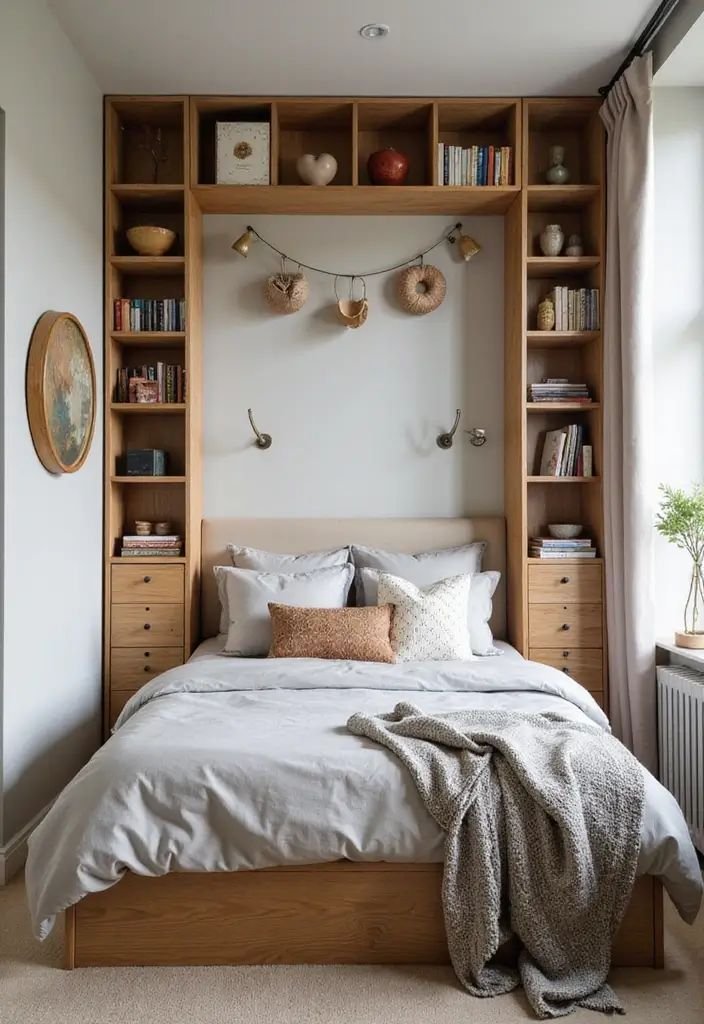
Older homes are a treasure trove of alcoves — these crooks and crannies usually seem like wasted space, but some alcoves make excellent reading nooks, while others may be the perfect place for a vanity. You can also make oddly shaped cutouts functional by turning them into a workspace, fitting shelves or a desk precisely within the dimensions to make better use of tight corners and slopes. In 2026, interior designers recommend starting with the room’s architectural framework — letting original features like ceiling height, fireplaces, and windows lead the design, then incorporating clever storage solutions where possible so every corner works efficiently and effortlessly.
8. Invest in Statement Lighting
Overhead lighting centred on a low ceiling makes a small room feel like a box. Replacing a flat ceiling fixture with a statement pendant, wall-mounted sconces, or layered lighting at multiple heights changes the room’s atmosphere entirely and draws attention away from its dimensions. Some of the most popular bedroom trends for 2026 include rich colours, luxurious details, warm wood tones, and curved silhouettes — particularly in bedroom furniture and lighting design. A single considered fixture does more for a small bedroom than a room full of generic lamps.
9. Add Wallpaper to Define and Distinguish
While the concept of adding wallpaper to a small room sounds counterintuitive — wouldn’t white paint do a better job of making the space feel larger? — designers are leaning into smaller proportions, not fighting them, and using wallpaper is an effortless and elegant way to give a small space a truly distinct personality. A single feature wall behind the bed anchors the room, adds depth, and eliminates the visual flatness that plain-painted small rooms often project.
10. Keep the Floor as Clear as Possible
Visual clutter at floor level is the fastest way to make a small room feel smaller. A single, well-chosen rug under and around the bed — rather than multiple small rugs or no rug at all — defines the sleeping zone and creates order. Clean lines, gentle colours, and smart storage make a room feel bigger than it is — every piece should earn its place, and nothing should feel crowded. Storage that lives inside furniture, behind doors, or on walls keeps the floor as open as possible, which is the single most reliable way to maintain a sense of space regardless of square footage.
Small bedrooms reward deliberate decisions more than large ones do. In a compact room, every choice is visible, every contradiction is felt, and every well-executed idea pays dividends far beyond its individual cost. The ten ideas above are not trends to chase — they are principles to apply, and they hold up long after the season changes.