



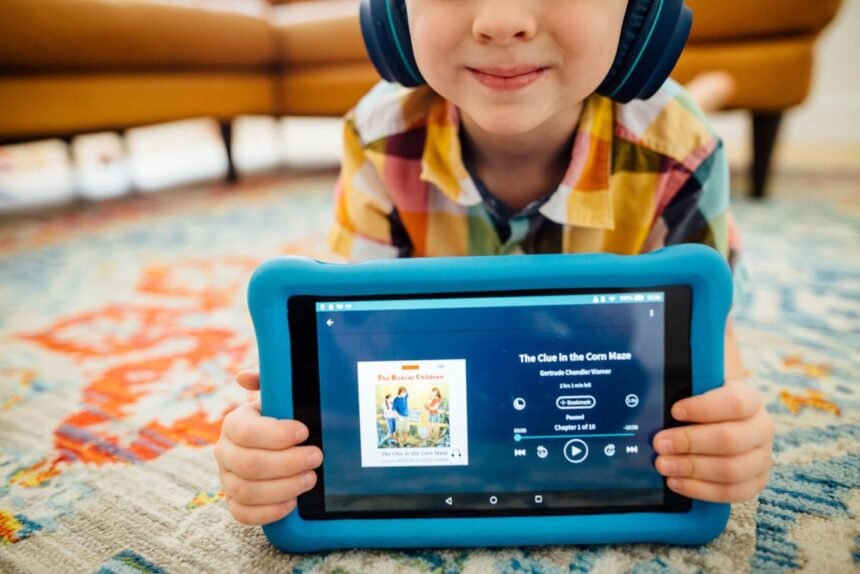
In a world dominated by vibrant touchscreens and constant visual stimulation, it’s easy to assume that kids need bright animation to stay hooked on a story.
Yet, one of the most powerful learning tools making a massive comeback isn’t visual at all. It’s sound.
Audio stories—ranging from classic audiobooks and bedtime podcasts to interactive audio dramas—are quietly transforming how kids learn, imagine, and process information. By stripping away visual distractions, listening forces young minds to do something visual media never asks of them: create the pictures themselves.
Here is a closer look at how audio storytelling shapes young minds, builds critical learning skills, and fires up creative thinking.

1. It Fires Up the “Mind’s Eye” (Active Imagination)
When a child watches a movie or a cartoon, the imagery is handed to them on a platter. The director decides what the dragon looks like, how tall the castle is, and what color the hero’s cape is. The child’s brain is essentially in passive consumption mode.
Audio storytelling flips this dynamic entirely.
When a narrator describes a “glowing, mysterious forest filled with whispering trees,” the child’s brain has to fill in the blanks. They construct the lighting, the shapes of the leaves, and the scale of the trees using their own memory and imagination. This mental visualization—often called the “mind’s eye”—is a critical cognitive muscle that builds spatial reasoning, creative thinking, and original problem-solving skills.
2. Accelerates Vocabulary and Language Comprehension
Children can comprehend spoken language at a much higher level than they can read on a page. A seven-year-old might struggle to decode complex written words like formidable, luminous, or mischievous, but when they hear those words performed naturally within a voice actor’s story, they instantly grasp the meaning through tone, context, and emotion.
Listening to audio stories exposes kids to:
- Advanced sentence structures they don’t typically hear in everyday casual speech.
- Proper pronunciation, rhythm, and vocal expression (prosody).
- Rich contextual vocabulary that elevates their own spoken and written language skills.
It acts as a natural bridge, making young listeners far more confident readers when they sit down with physical books.
3. Improves Focus and Listening Stamina
Modern screen time relies on rapid scene cuts, flashy effects, and constant dopamine hits designed to hold short attention spans. Over time, this makes sitting still and focusing on a single task feel remarkably difficult for kids.
Audio stories require deliberate, sustained focus. Without visual cues to lean on, children have to pay close attention to voice shifts, sound effects, and narrative pacing to keep track of the plot. Practicing this kind of “active listening” builds mental stamina, extending their attention spans in classrooms, during conversations, and while studying.
4. Makes Screen-Free Downtime Easy
One of the biggest struggles for modern parents is finding quiet activities that don’t involve a glowing screen—especially during long car rides, quiet afternoon hours, or the wind-down routine before bed.
Audiobooks and podcasts fill this gap perfectly. They give kids the entertainment and narrative engagement they crave without the eye strain or nervous system overstimulation caused by screens. Listening to a calm, immersive bedtime story reduces cortisol levels, relaxes the mind, and helps children transition smoothly into sleep.

5. Teaches Deep Emotional Empathy
Because audio storytelling relies so heavily on human voice tone—sighs, pauses, whispers, and shifts in pitch—it taps directly into emotional intelligence.
Children learn to pick up on subtle emotional cues long before they can articulate them. Hearing a character express fear, excitement, grief, or relief through vocal performance helps kids identify and understand complex emotions in themselves and others, building a strong foundation for social empathy.
The Takeaway
Audio stories aren’t just a substitute for physical books or a distraction for long road trips—they are a high-value tool for childhood development. By encouraging kids to listen deeply, imagine boldly, and build their own mental worlds, audio storytelling lays down the foundation for a lifetime of strong language skills, creative thinking, and a genuine love for stories.