



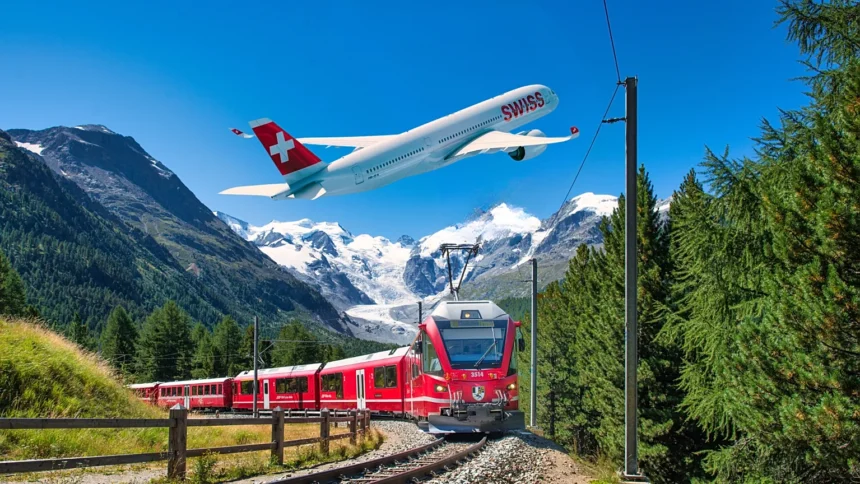
Planning a European holiday is exciting, but deciding how to travel between destinations can be a little confusing. Should you book a flight to save time or choose a train journey to enjoy the scenery along the way?
Europe offers excellent options for both. With high-speed rail networks connecting major cities and plenty of budget airlines operating across the continent, travellers have more flexibility than ever.
However, the best option depends on your destination, budget, travel time, and personal preferences. Let’s compare trains and flights to help you decide which makes more sense for your next European adventure.
1. Travel Time: Trains vs Flights
At first glance, flying might seem like the faster option. A flight between Paris and Amsterdam, for example, takes around 1 hour and 15 minutes.
However, the actual travel experience involves more than time spent in the air. You need to reach the airport, complete security checks, manage baggage, and travel from the arrival airport into the city.
Trains often provide a more convenient experience because major railway stations are located close to city centres.
For example, travelling from London to Paris by Eurostar takes approximately 2 hours and 16 minutes, with direct connections between central stations.
Winner: Trains for many short-distance European journeys.
2. Cost: Which Option Is More Affordable?
Budget is an important consideration when planning a European holiday.
Flights can sometimes be cheaper than trains, particularly when budget airlines offer promotional fares. However, the advertised ticket price doesn’t always include baggage, seat selection, airport transfers, or other additional charges.
Train tickets can also become expensive when booked at the last minute. However, booking early and choosing off-peak services can help reduce costs.
Before making a decision, compare the complete journey cost rather than looking at the ticket price alone.
Winner: It depends on the route, booking date, and additional travel expenses.
3. Comfort and Convenience
One of the biggest advantages of travelling by train is the extra freedom it offers.
You can generally move around, stretch your legs, enjoy refreshments, and look out of the window without feeling restricted to a small seat for the entire journey.
Train stations also tend to offer easier access to city centres, which can make arriving at your destination less stressful.
Flights, on the other hand, may be more convenient for longer distances, especially when direct connections are available.
Winner: Trains for comfort on short and medium-distance journeys.
4. Scenic Views and Travel Experience
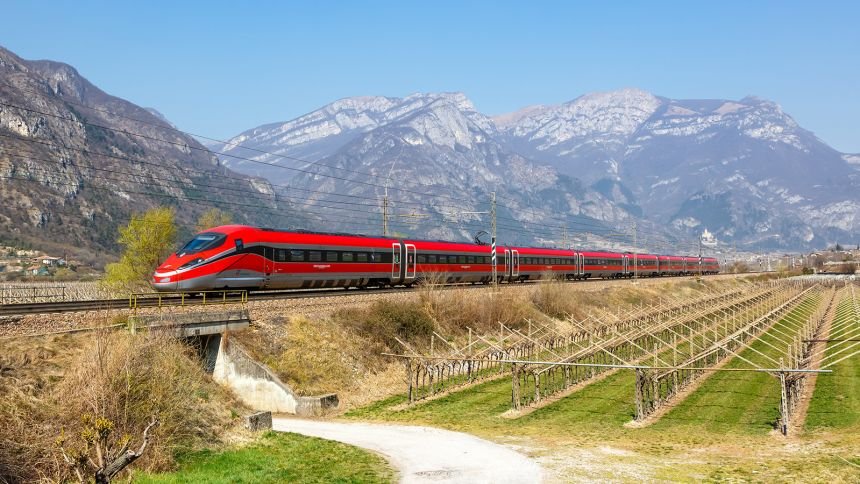
If you enjoy watching beautiful landscapes pass by, train travel offers something special.
Imagine travelling through the Swiss Alps, exploring the French countryside, or watching coastal scenery along an Italian railway route. These experiences can become some of the most memorable parts of your holiday.
Flying is certainly faster for covering long distances, but you miss much of the scenery along the way.
For travellers who enjoy slow travel and discovering destinations beyond the usual tourist attractions, trains can make the journey feel like part of the holiday itself.
Winner: Trains, especially for scenic European routes.
5. Environmental Impact
Sustainable travel is becoming increasingly important, and transportation choices can influence your holiday’s environmental footprint.
Generally, trains produce fewer greenhouse gas emissions per passenger than flights, particularly on electrified railway routes powered by cleaner energy.
Flying, especially over short distances, can have a higher carbon footprint per passenger.
If reducing your environmental impact is a priority, choosing rail whenever practical can be a meaningful step.
Winner: Trains in most comparable European travel scenarios.

6. Luggage and Travel Flexibility
Train travel often provides more flexibility when it comes to luggage. Passengers generally don’t have to deal with the same checked-baggage process used by airlines, although luggage size and quantity rules still apply.
Flights, particularly budget airlines, may charge extra for cabin baggage and checked luggage.
Trains can also be convenient when planning multi-city holidays because you can travel directly between central stations.
However, flights offer a wider range of destinations, particularly for islands and locations without convenient railway connections.
Winner: Trains for many city-to-city trips; flights for destinations with limited rail access.
Train vs Flight: Quick Comparison
| Factor | Train | Flight |
|---|---|---|
| Short-distance travel | Often convenient | Airport time adds up |
| Long-distance travel | Can take longer | Usually faster |
| Comfort | More freedom to move | More restricted seating |
| Scenic experience | Excellent | Limited |
| Luggage | Often more flexible | Restrictions and extra fees |
| Environmental impact | Generally lower | Generally higher |
| Remote destinations | Limited access | Wider reach |
When Should You Choose a Train or a Flight?
Choose trains when travelling between nearby European cities such as London, Paris, Brussels, Amsterdam, and Brussels-area connections. They are particularly useful for multi-city holidays where central station access saves time.
Flights are generally a better choice when covering long distances, travelling to islands, or visiting destinations where direct rail connections are limited.
A combination of both can also work well. For example, you could explore Paris, Brussels, and Amsterdam by train before taking a flight to another part of Europe.
Final Thoughts
So, train or flight – which is better for your next European holiday?
There isn’t one answer that works for every traveller. Flights offer speed and wider destination coverage, while trains provide convenience, scenic experiences, and often a more relaxed way to explore Europe.
If your holiday focuses on visiting multiple nearby cities, trains are definitely worth considering. But if you’re travelling across longer distances, flights may save valuable time.
Ultimately, the smartest approach is to compare routes, prices, and total travel time before booking. Sometimes, choosing the right transportation can make your entire European holiday more enjoyable.