


If you’ve ever scrolled through social media looking at “minimalist capsule wardrobes,” you’ve probably seen influencers telling you to buy $300 organic cotton t-shirts and $800 designer blazers. It gives off the impression that dressing simply is a luxury reserved for people with endless disposable income.
That is a complete myth.
Building a timeless capsule wardrobe isn’t about spending a small fortune at high-end boutiques—it’s about changing how you buy, what you prioritize, and how you combine what you already own. You can build a versatile, high-end-looking collection on a modest budget if you know where to focus your money and where to save it.
Here is a practical, step-by-step strategy to create a year-round capsule wardrobe without wrecking your bank account.
1. Shop Your Own Closet First
Before you spend a single dollar, clear out an afternoon and audit what you already own.
Most people use only about 20% of their closet on a regular basis. Pull everything out onto your bed and sort your clothes into three piles:
- The Daily Drivers: Pieces you wear constantly and feel great in.
- The “Almosts”: Clothes that fit well but rarely get worn because you lack the right piece to style them with.
- The Dead Weight: Items that don’t fit, feel uncomfortable, or haven’t seen daylight in over a year.
Your “Daily Drivers” form the initial base of your capsule. By organizing what you already have, you’ll pinpoint the exact gaps in your closet—like needing a solid pair of straight-leg jeans or a neutral blazer—so you don’t buy duplicates of things you don’t need.
2. Master the “Cost-Per-Wear” Mindset
When you’re shopping on a budget, it’s tempting to buy cheap fast-fashion pieces in bulk. But buying five $15 synthetic tops that pilling after two washes ends up costing more in the long run than investing in one solid $50 cotton shirt that lasts for years.
This comes down to Cost-Per-Wear (CPW):
$$\text{Cost-Per-Wear} = \frac{\text{Price of Item}}{\text{Times Worn}}$$
A $150 pair of dark-wash jeans worn 150 times over two years costs $1.00 per wear. A $25 trendy top worn twice before losing its shape costs $12.50 per wear. Spend your budget on core items you wear weekly—like outerwear, denim, and footwear—and save on secondary items like casual t-shirts or light summer tops.
3. Stick to a Cohesive Neutral Palette
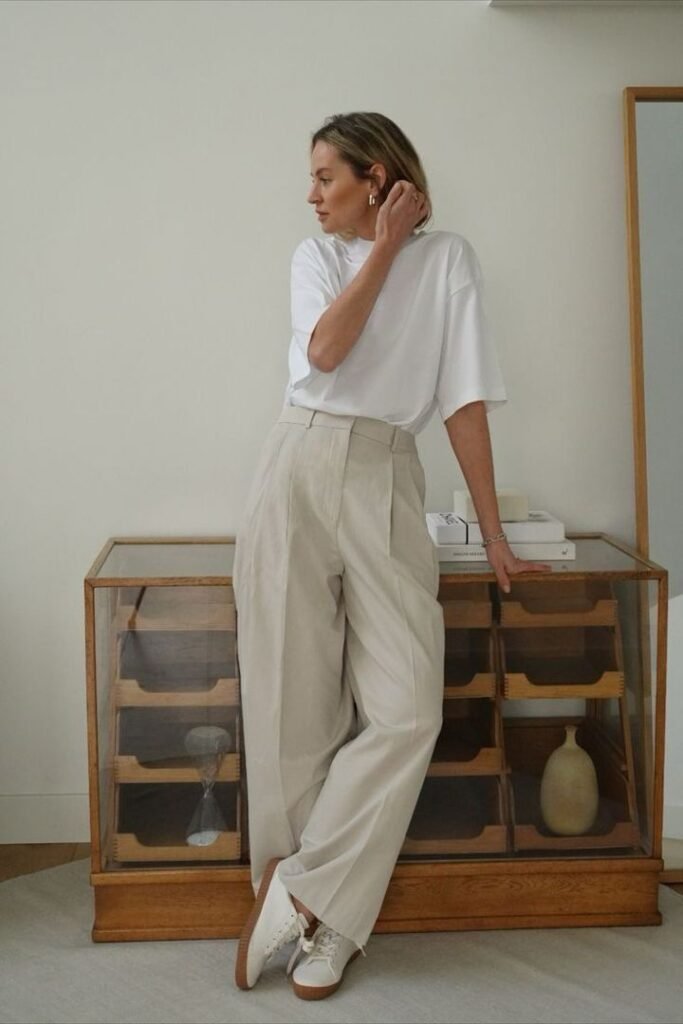
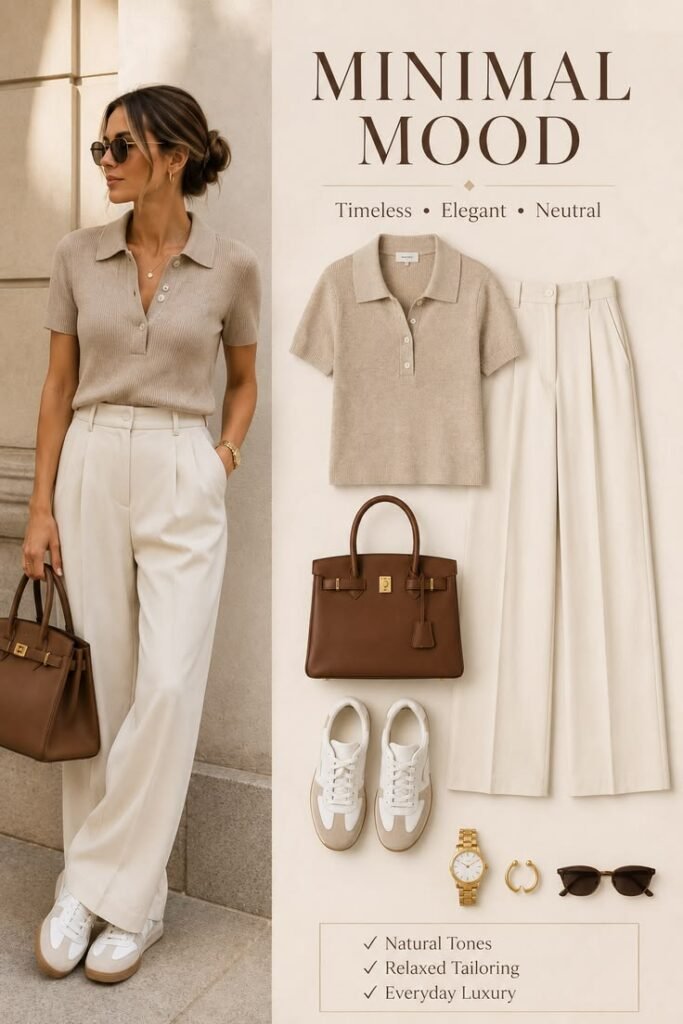
The fastest way to make a small wardrobe feel huge is color coordination. If every piece in your closet works with every other piece, your outfit options multiply exponentially.
Anchor your base around 3–4 core neutrals:
- Dark Neutrals: Black, navy, or deep charcoal.
- Light Neutrals: Cream, white, light grey, or camel.
When 80% of your clothes sit within this neutral wheelhouse, getting dressed becomes foolproof. A white button-down works seamlessly with blue denim, black trousers, or a camel skirt without a second thought.
4. Know Where to Find Budget-Friendly Quality
You don’t need luxury tags to get high-quality fabrics. You just need to know where to look and what tags to read.
- Thrift and Resale Platforms: Poshmark, ThredUp, and local vintage shops are goldmines for secondhand luxury blazers, 100% wool coats, and real leather boots at 70% off retail prices.
- Read the Fabric Labels: Always check the care tag before buying off-the-rack. Prioritize natural fibers like cotton, linen, wool, and silk over polyester and acrylic. Natural materials hold up significantly better over time, breathe easier, and look far more expensive than synthetic blends.
- Embrace a Local Tailor: A $30 pair of thrifted pants or a mid-range store suit tailored to your exact waist and hem measurements will always look more expensive than an off-the-rack $500 designer piece that doesn’t fit quite right.
5. The Golden Rule: The 3-Outfit Test
Never buy a new piece of clothing unless you can instantly name three distinct outfits you can make with items currently sitting in your closet.
If a top only works with one specific pair of shoes and one specific skirt, skip it. A true capsule wardrobe piece should flex seamlessly between a casual weekend look, a workday outfit, and an evening out.
The Takeaway
A timeless wardrobe isn’t bought overnight in a single shopping spree—it’s built thoughtfully over time. By focusing on fit, natural fabrics, neutral colors, and smart secondhand sourcing, you can curate a high-impact closet that looks effortlessly elevated without breaking the bank.