


Ask someone who has never taken a long-distance bus across Europe what they imagine it to be like, and the answers tend to follow a familiar pattern. Uncomfortable seats. Unpredictable timing. Questionable stops in the middle of nowhere. A general sense that it is the option you take when every other option has already failed you. It is a portrait painted almost entirely from outdated information — and for anyone who has actually travelled Europe by coach in recent years, it bears very little resemblance to reality.
Long-distance bus travel in Europe has changed dramatically over the past decade. The network is larger, the vehicles are better, the booking process is faster, and the fares remain genuinely low in a travel landscape where almost everything else has become more expensive. FlixBus sits at the centre of that transformation, and if you have been curious about trying it — or simply want to understand how it all works before committing — this is the guide that covers everything.
How FlixBus Actually Works
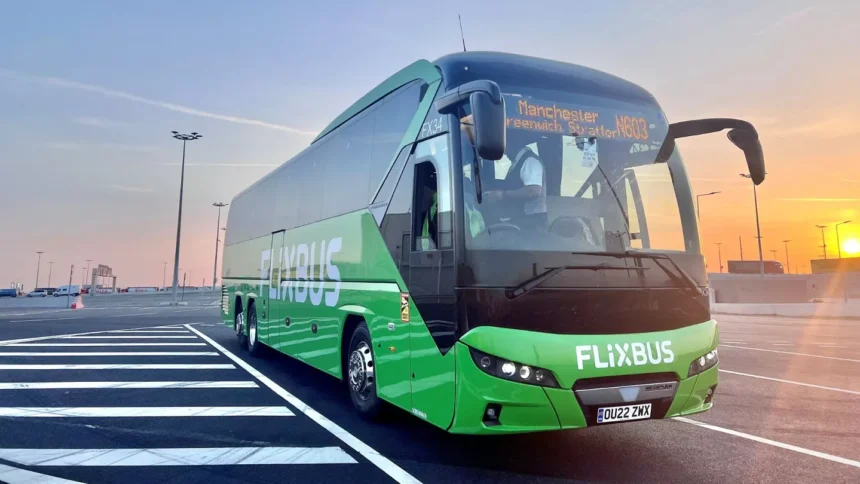
FlixBus operates as a technology and brand platform rather than a traditional bus company. It partners with regional coach operators across Europe, standardises the service experience under its recognisable green branding, and manages all ticketing, routing, and customer communication centrally. The result is a network that feels consistent and reliable regardless of which country you are travelling through or which underlying operator is running the coach on a given route.
Booking is done entirely online — through the FlixBus website or app — and tickets are digital. There are no physical ticket counters to queue at, no paper to print, and no check-in process beyond scanning your ticket barcode as you board. For first-time travellers, the simplicity of the system is one of its most immediately reassuring qualities.
What the Routes and Network Look Like
The scale of the FlixBus network is genuinely impressive and worth understanding before you plan any European itinerary. The platform connects over 5,000 destinations across more than 40 countries — spanning Western Europe’s dense urban corridors, Central Europe’s culturally rich city clusters, and extending into Eastern Europe, Scandinavia, and the Balkans. Popular route pairs include Paris to Brussels, Munich to Vienna, Amsterdam to Cologne, Prague to Berlin, and Rome to Florence, among hundreds of others.
Journey times vary considerably depending on the route and number of stops. A two-hour connection between neighbouring cities sits at one end of the spectrum. A fourteen-hour overnight crossing between capitals sits at the other. Both are served well by the FlixBus model — the short routes for their price efficiency, the long routes for their overnight accommodation value.
What to Expect Onboard
Modern FlixBus coaches on long-distance routes come equipped with free Wi-Fi, power outlets at every seat, air conditioning, reclining seats, and onboard toilets on most major routes. Legroom is comparable to economy class on a budget airline — adequate rather than generous, but significantly more comfortable than the reputation suggests. For overnight journeys, bringing a neck pillow and a light layer for warmth during air-conditioned stretches makes a noticeable difference to how rested you feel on arrival.
Luggage allowances are straightforward — one piece of hand luggage in the overhead rack and one larger bag in the hold compartment beneath the bus. Additional bags can be added at booking for a small fee. Arriving at the departure point ten to fifteen minutes before scheduled departure is generally sufficient, though major city terminals during peak summer months are worth arriving at slightly earlier.
The Practical Reality of European Bus Travel
Long-distance bus travel across Europe is not a compromise. For the right traveller — someone who values flexibility, affordability, and the particular pleasure of watching a continent change through a wide coach window — it is genuinely the best option on the table. FlixBus has built a network large enough and reliable enough to carry that argument with confidence.
The first journey is always the one that converts the sceptic. Everything after that tends to feel obvious.
👉 Explore FlixBus routes across Europe and book your next journey today — https://www.flixbus.in/