



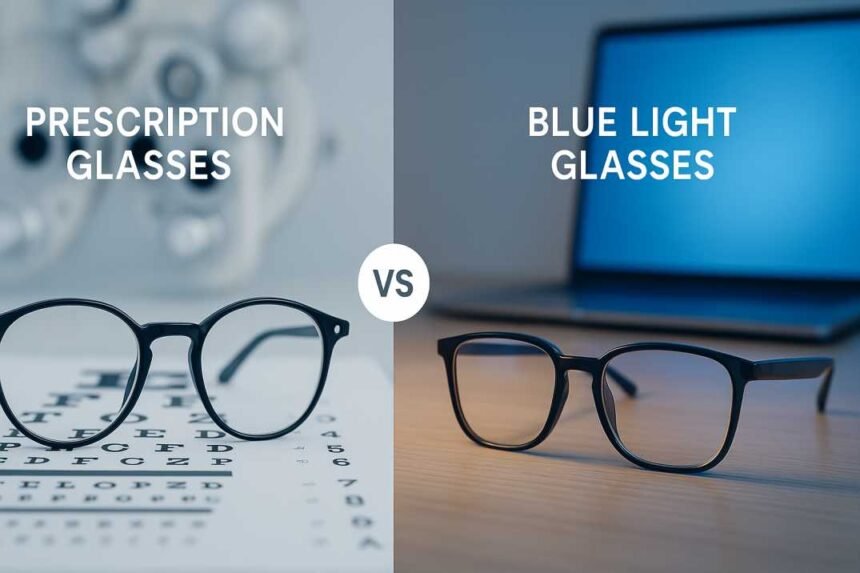
With more people spending hours every day on computers, smartphones, and tablets, protecting our eyes has become more important than ever. If you’ve been shopping for eyewear recently, you’ve probably come across two popular options: blue light glasses and prescription glasses. Although they may look similar, they serve very different purposes.
So, how do you know which one is right for you? The answer depends on your vision needs, daily routine, and whether you have an existing eye prescription. Understanding the differences can help you make an informed decision and keep your eyes comfortable throughout the day.
What Are Blue Light Glasses?
Blue light glasses are designed to filter or reduce a portion of the blue light emitted by digital screens, LED lighting, and other artificial light sources. They are especially popular among people who spend long hours working on computers, attending virtual meetings, gaming, or scrolling through their phones.
Many users report that blue light glasses help reduce screen glare and make extended screen use feel more comfortable. While scientific research continues to explore the long-term effects of blue light exposure, experts generally agree that excessive screen time can contribute to digital eye strain. Symptoms may include tired eyes, headaches, blurred vision, dry eyes, and difficulty focusing after prolonged screen use.

It’s important to remember that blue light glasses do not correct your vision. If you have nearsightedness, farsightedness, or astigmatism, blue light glasses alone won’t help you see more clearly unless they also include your prescription.
What Are Prescription Glasses?
Prescription glasses are specially made to correct vision problems based on an eye examination conducted by an optometrist or ophthalmologist. They improve how you see by correcting refractive errors such as nearsightedness (myopia), farsightedness (hyperopia), astigmatism, or age-related near vision changes (presbyopia).
Prescription lenses are customised to your unique vision requirements, allowing you to see clearly whether you’re reading a book, driving, using a computer, or watching television.
Today’s prescription glasses also come with a variety of optional lens enhancements, including anti-reflective coatings, scratch-resistant finishes, UV protection, and blue light filtering. This means you don’t always have to choose between clear vision and screen comfort—you can often enjoy both in a single pair of glasses.
Which One Do You Actually Need?
The answer depends on your eyesight and lifestyle.
If your vision is clear and you don’t require corrective lenses, but you spend several hours a day looking at digital screens, blue light glasses may provide additional visual comfort. However, they’re only one part of maintaining healthy screen habits. Taking regular breaks, adjusting screen brightness, and following the 20-20-20 rule—looking at something 20 feet away for 20 seconds every 20 minutes—can also help reduce eye strain.
On the other hand, if you’ve been experiencing blurry vision, difficulty reading, headaches while driving, or frequent squinting, it’s a good idea to schedule a comprehensive eye exam. These symptoms could indicate that you need prescription glasses rather than simply blue light filtering.
If you already wear prescription glasses and spend most of your day using digital devices, you don’t need a separate pair of blue light glasses. Many optical retailers offer prescription lenses with built-in blue light filtering, allowing you to enjoy clear vision and added screen comfort in one convenient pair.
Can You Have Both?
Absolutely. In fact, many people do.
Modern eyewear technology allows blue light filtering to be incorporated into prescription lenses, making them a practical choice for professionals, students, gamers, and anyone who spends significant time in front of screens. This eliminates the need to switch between different pairs of glasses throughout the day.
If you work in front of a computer for eight or more hours daily, combining your prescription with blue light protection can be a convenient solution that supports both visual clarity and everyday comfort.
Final Thoughts
Blue light glasses and prescription glasses are designed for different purposes, so one isn’t necessarily better than the other. Blue light glasses may help improve comfort during extended screen use, while prescription glasses are essential for correcting vision problems and helping you see clearly.
If your vision is already perfect but your eyes feel tired after a long day on the computer, blue light glasses could be worth considering. However, if you’re struggling to see clearly or haven’t had an eye exam in a while, prescription glasses should be your priority. And if you need both vision correction and screen protection, prescription lenses with built-in blue light filtering offer the best of both worlds, giving you clearer vision and greater comfort throughout your day.