



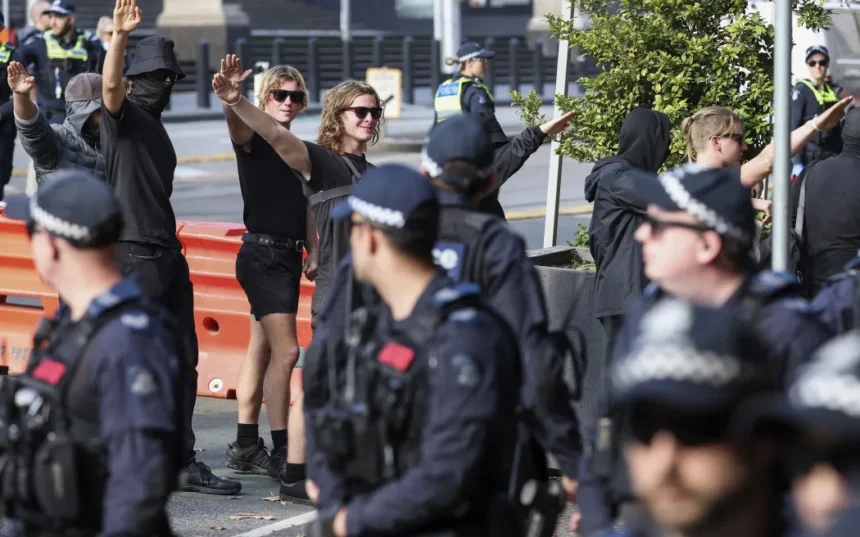
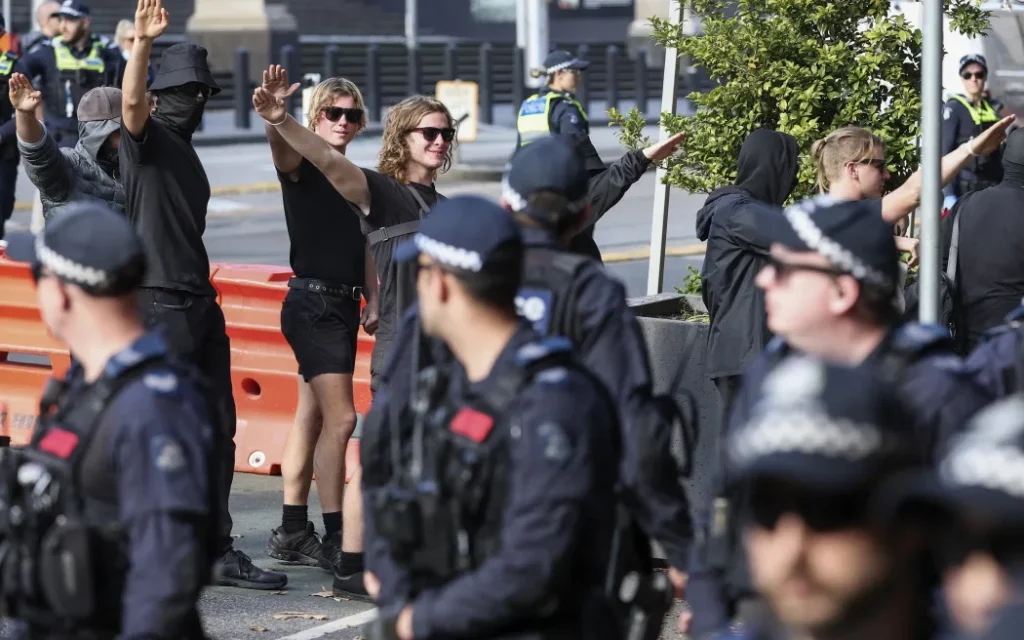
The Australian government has issued a firm condemnation of upcoming far-right anti-immigration rallies scheduled across the country, describing them as “racist, divisive, and harmful to social cohesion.” The rallies, planned for August 31, 2025, have sparked widespread debate and concern among political leaders, community groups, and civil rights organizations. The government’s response reflects a broader commitment to inclusivity and multiculturalism in a nation that has long prided itself on its diversity.
Prime Minister Anthony Albanese and members of his cabinet have publicly denounced the planned demonstrations, emphasizing that such events undermine Australia’s values of tolerance and mutual respect. The Prime Minister highlighted that the rallies, organized by extremist groups, aim to exploit social anxieties for political gain, often targeting immigrants, refugees, and minority communities. Albanese urged Australians to reject messages of hatred and instead celebrate the contributions of immigrants who have enriched the country’s economy, culture, and society.
Deputy Prime Minister Richard Marles also weighed in, noting that freedom of speech does not extend to inciting hatred or encouraging discrimination. Marles emphasized that Australia’s legal framework allows peaceful protest, but extremist rallies that propagate xenophobia and racism cross a line that must be addressed. Authorities are reportedly monitoring the planned events to ensure public safety, prevent violence, and hold organizers accountable for any unlawful actions.
Civil society groups have expressed alarm over the rallies, warning that they could inflame tensions in communities already dealing with social and economic challenges. “These rallies are not just a political statement—they are a threat to the harmony of our neighborhoods,” said Reza Jaffari, spokesperson for the Australian Multicultural Council. Community organizations have called on citizens to respond with solidarity, organizing counter-events that promote inclusiveness, intercultural understanding, and unity.
The rallies come at a sensitive time politically, as the Albanese government is preparing for a series of international engagements, including meetings with U.S. officials. In particular, a recent pre-arranged meeting between Deputy Prime Minister Marles and representatives from the U.S. Pentagon had been misrepresented in some media reports, adding further tension to the political environment. Government sources assert that extremist groups are attempting to exploit such events to garner attention for their anti-immigration agenda.
Law enforcement agencies are taking a proactive approach to ensure the rallies do not escalate into violence. Police departments in several major cities, including Sydney, Melbourne, and Brisbane, have announced increased security measures and crowd management strategies. They have also issued public warnings urging citizens to avoid areas where protests are expected and to report any suspicious or unlawful activity. Officials emphasize that their primary goal is to protect the safety of all Australians while upholding the rights of peaceful assembly.
Political analysts note that the rallies reflect a growing trend of far-right mobilization in Australia and globally, often fueled by economic uncertainty, social media misinformation, and polarized political discourse. However, experts also caution that such movements remain on the fringes of mainstream politics and that the overwhelming majority of Australians reject extremist ideologies. Public opinion surveys indicate strong support for multicultural policies, refugee resettlement programs, and inclusive immigration measures.

The Albanese government’s condemnation of the rallies has been welcomed by many community leaders, civil rights organizations, and advocacy groups. By taking a clear stance against xenophobia and promoting social cohesion, the government is sending a message that Australia will not tolerate efforts to divide its citizens along ethnic or cultural lines. Officials have also reiterated the importance of constructive dialogue, education, and community engagement to address the underlying concerns that extremist groups attempt to exploit.
In conclusion, the planned anti-immigration rallies have sparked significant concern across Australia, prompting a unified response from the government, law enforcement, and civil society. While the right to protest remains a fundamental democratic principle, the Albanese government is clear that rallies promoting hatred, racism, or discrimination are unacceptable. Through condemnation, vigilance, and community engagement, Australia continues to defend its commitment to multiculturalism, tolerance, and social harmony, reinforcing the values that have long made it one of the world’s most inclusive and diverse nations.