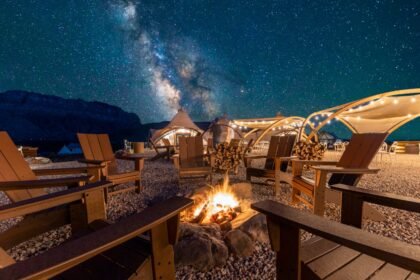



Most travelers chase the brightest cities, the busiest squares, and the most photographed landmarks. But there’s a rare kind of magic waiting in the places where silence rules, where crowds thin out, and where nature seems to whisper instead of roar. This year, I made a personal promise: to travel not just to see the world, but to hear it. What unfolded was a journey through some of the quietest pockets of the planet—destinations overlooked not because they lack beauty, but because they offer a different kind of adventure.
1. The Whispering Dunes of Liwa, UAE
The Liwa Desert is like stepping into a golden ocean—untouched, endless, and impossibly still. At sunrise, the dunes glow in colors no photograph can fully capture. Even the wind moves softly here, creating a gentle rustling sound that feels like nature exhaling.

There are no crowds, no traffic, no chatter. Just sand, sky, and space. I learned that silence isn’t empty; it’s full of small, delicate sounds you only notice when you finally slow down. The desert became a place where my thoughts stretched out like the dunes themselves, unhurried and uncomplicated.
2. The Lost Water Gardens of Plitvice, Croatia (Off-Season)
Plitvice Lakes is usually buzzing with tourists, but arrive in late autumn, and you’ll discover a completely different world. The waterfalls still thunder, but the walkways—usually packed shoulder to shoulder—are calm, open, and peaceful.
Mist curls above the emerald lakes like something out of a fantasy novel. Fallen leaves float silently on the water. In the quiet, you notice details: the hum of distant cascades, the crunch of damp wood beneath your boots, the way every waterfall seems to have its own melody. It feels like visiting a secret version of a famous place—one few people even know exists.
3. The Fog Villages of Nagano, Japan
High in the Japanese Alps, small villages in Nagano wake up wrapped in a thick morning fog. Wooden homes peek out like ghosts of centuries past, and the air smells of cedar, rain, and woodsmoke. Walking the narrow lanes at dawn feels like drifting through a watercolor painting.
Here, silence is not stillness—it’s serenity. Locals greet you with soft nods. Temple bells echo faintly through the valley. Even the rivers seem to flow quietly, as if they’re mindful guests. It’s the kind of place where your heartbeat sets the rhythm of your day.
4. The Mossy Trails of Iceland’s Westfjords
Most travelers head for Reykjavik or the Golden Circle, but the Westfjords reward those who crave solitude. Jagged cliffs slice into the sea, puffins nest undisturbed on rocky edges, and waterfalls cascade without a single tour bus in sight.
There’s a silence here that feels ancient—older than the sagas, older than the land itself. Stand at the edge of Latrabjarg Cliffs, and you can hear the wind whip around you in spirals, layered with the faint calls of seabirds. The world feels huge, wild, and raw. It reminds you that solitude isn’t loneliness; it’s connection of a different kind.
5. The Blue Stillness of Canada’s Kootenay Lakes
Kootenay is an underrated treasure—a place where emerald forests touch clear lakes that mirror every cloud drifting overhead. On a quiet morning paddle, you can hear your oar gently dipping into the water. No motors, no crowds, just you and a ribbon of blue stretching into the horizon.

Somewhere in that stillness, I felt more grounded than I had in months. Nature has a way of answering questions you didn’t know how to ask.
The Beauty of Going Quiet
Not all journeys need noise, nightlife, and neon. Sometimes, the most meaningful trips are the ones that invite you inward—toward calm, clarity, and rediscovery. The world’s quiet places remind us of something powerful: silence is not absence. It’s presence. It’s space. It’s the invitation we rarely accept in our busy, buzzing lives.
So maybe the next time you plan a trip, look for the edges of the map—the places where the volume drops and beauty rises.