


Oslo doesn’t behave like most European capitals. It’s compact enough to cross on foot in twenty minutes, yet each pocket of the city has its own personality, so the neighborhood you choose shapes your trip almost as much as your itinerary does. Get it right, and you’re walking to the Royal Palace one minute and sipping coffee in a converted factory the next. Get it wrong, and you’re commuting across town for everything. Here’s a complete breakdown of where to stay in Oslo, organized by neighborhood and traveller type, with real hotel picks for each.
- Sentrum (City Centre) — Best for First-Timers
- Aker Brygge and Tjuvholmen — Best for Waterfront Luxury
- Grünerløkka — Best for Trendy, Independent Travel
- Bjørvika — Best for Modern Architecture
- Frogner and Majorstuen — Best for Families and Quiet Luxury
- Gamle Oslo and Grønland — Best for Budget Travel
- Practical Booking Tips
Sentrum (City Centre) — Best for First-Timers
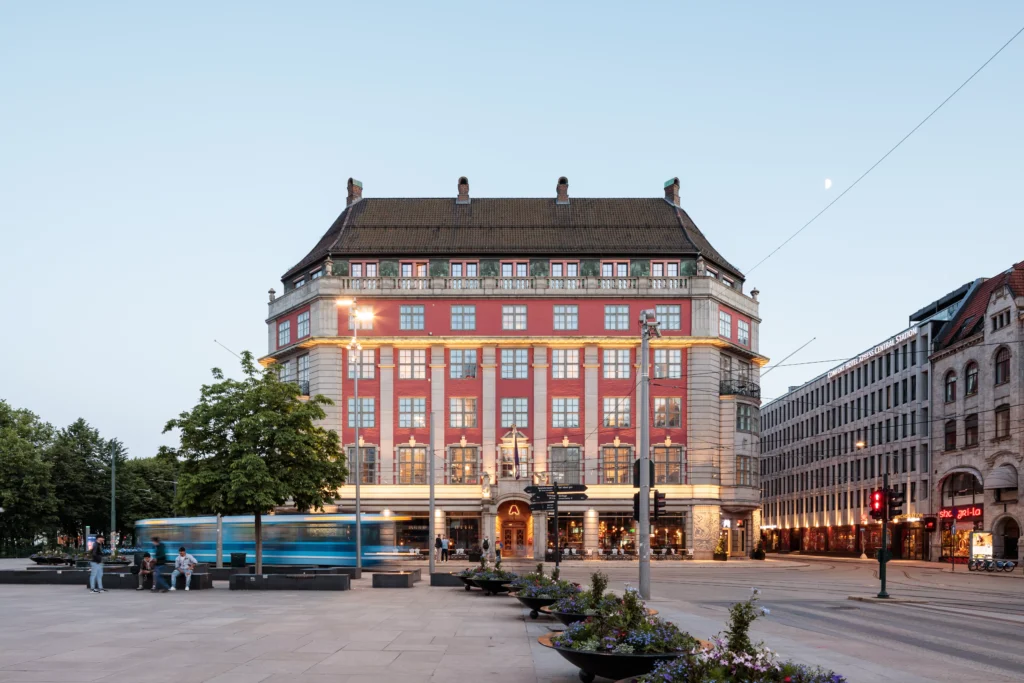
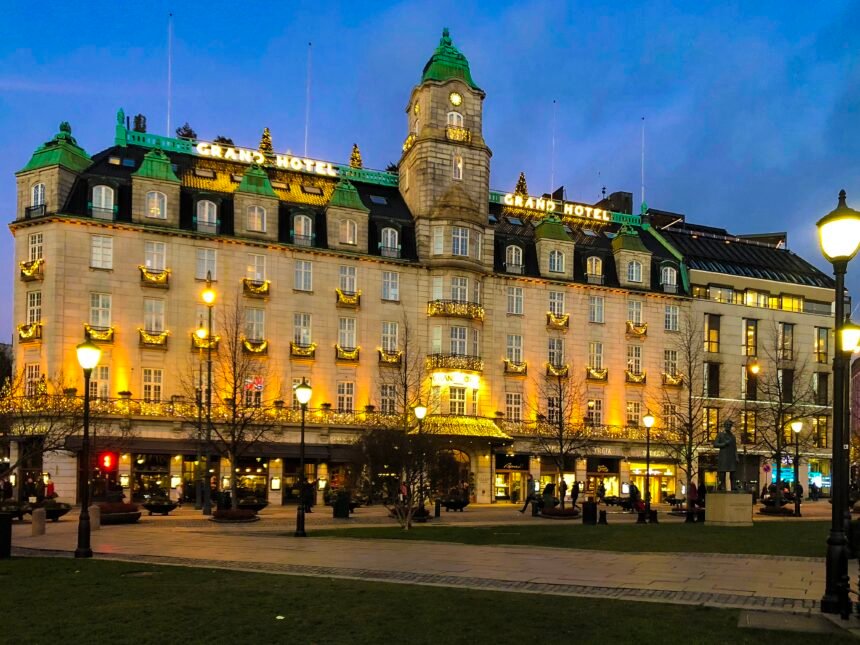
If this is your first visit or you only have a few days, Sentrum is the obvious base. It’s the most central district, home to the Royal Palace, Oslo Cathedral, Akershus Fortress, and Oslo City Hall. Everything is walkable, and Oslo Central Station sits right here for easy day trips. Hotel Amerikalinjen blends maritime heritage with Nordic minimalism just steps from Karl Johans Gate, while the Grand Hotel Oslo offers old-world elegance with a rooftop bar overlooking the city’s main boulevard. Sentrum suits virtually any traveller type, with nightlife and clubs concentrated here for younger visitors.
Aker Brygge and Tjuvholmen — Best for Waterfront Luxury
This former shipyard turned glossy harbor district is where Oslo’s fjord meets its high-end side. The Thief, perched on the private peninsula of Tjuvholmen, pairs contemporary art with a rooftop bar and high-tech spa, making it Oslo’s signature luxury stay. The area is also home to the Astrup Fearnley Museum of Modern Art and serves as the departure point for Oslo Fjord cruises. Expect premium pricing here — it’s consistently ranked among the city’s most expensive districts — but the waterfront dining and architecture justify it for travellers prioritizing atmosphere over budget.
Grünerløkka — Best for Trendy, Independent Travel
Grünerløkka has a distinctly hipster-oriented atmosphere, known for independent cafés, vintage shops, bars, record stores and street art. Formal hotels are scarcer here, but the Anker Hotel offers large, comfortable rooms just a short walk from the neighborhood, and Scandic Vulcan sits directly beside the Akerselva river and Oslo’s beloved food hall, Mathallen. This is the right pick if you want mornings at sourdough cafés and evenings exploring vintage shops over five-star polish.
Bjørvika — Best for Modern Architecture
Built largely over the past two decades, Bjørvika sits just east of the city center and is the place to stay for modern architecture, contemporary art galleries, fancy restaurants, and fjord swimming. This is Oslo’s Opera House and MUNCH Museum district, and staying here puts you within easy reach of the water without sacrificing central convenience. It’s a strong fit for design-focused travellers who want something other than Sentrum’s historic feel.
Frogner and Majorstuen — Best for Families and Quiet Luxury
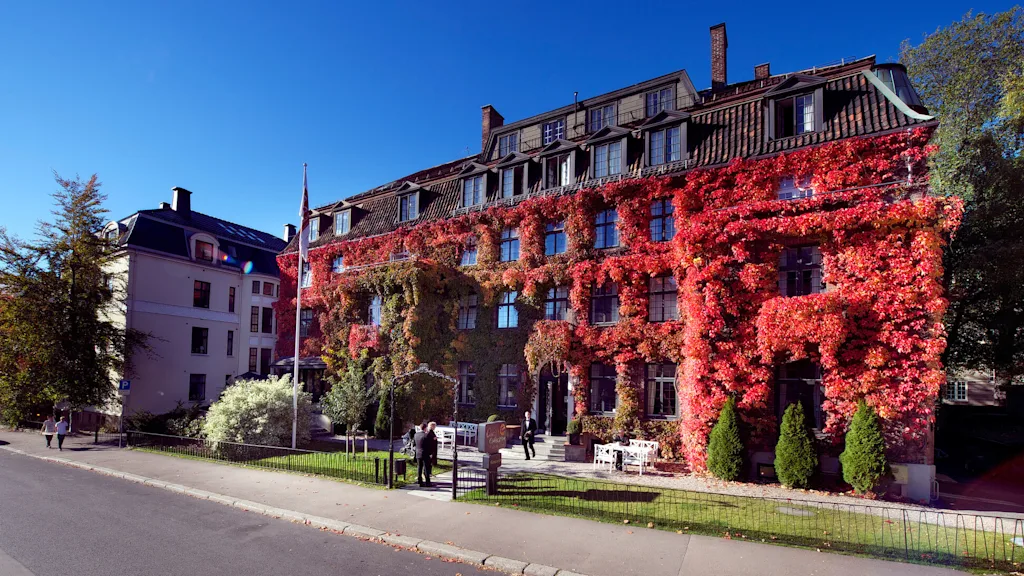
Frogner is a high-end residential neighbourhood with the highest real estate prices in Norway and some of the best-regarded restaurants in the city, anchored by Vigeland Sculpture Park. The Clarion Collection Hotel Gabelshus and Scandic Solli are both well-placed for travellers wanting Frogner’s calmer, leafier streets without leaving central Oslo. Majorstuen, just next door, works as a practical alternative — it’s where most of Oslo’s metro lines converge, offering quieter accommodation with fast access everywhere else in the city.
Gamle Oslo and Grønland — Best for Budget Travel
Gamle Oslo is multicultural with lower-priced hotels across the board, making it a strong option for travellers watching their budget. Expect picturesque old-town charm, fantastic and affordable Asian and Middle Eastern food, and a location that’s virtually central without the Sentrum price tag. The Scandic Helsfyr offers an affordable, well-connected 4-star option, while Grønland’s open-air markets and street food make this area genuinely rewarding rather than a compromise.
Practical Booking Tips
Norway’s hotel prices shift noticeably by season — June through August commands the highest rates and tightest availability, so book at least two to three months ahead for summer. Breakfast is included at most mid-range and upper hotels, which matters given Oslo’s high dining costs. If walkability is your priority, Sentrum, Aker Brygge, and Bjørvika keep you closest to major sights; if you want a more local, lived-in feel, Grünerløkka or Gamle Oslo deliver that without sacrificing easy tram or metro access back to the centre.
Oslo rewards travellers who think about neighborhood character as much as star ratings. Once you know whether you want history, design, nightlife, or quiet green space outside your door, the right hotel — and the right part of the city — becomes an easy call.