



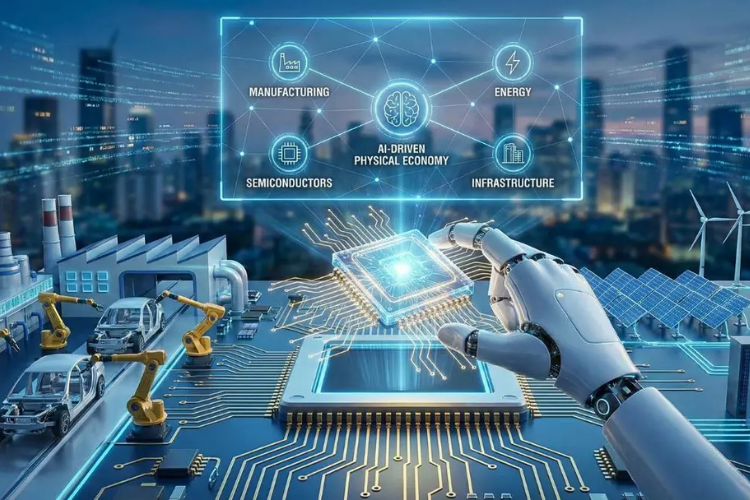
The global technology landscape is evolving at an unprecedented pace in 2026. From massive artificial intelligence investments to international regulatory battles and emerging clean-energy innovations, the tech industry is entering a transformative phase. Governments, startups, and major corporations are all racing to shape the future of digital infrastructure, automation, and sustainable energy.
Here are the latest developments currently shaping the global tech ecosystem.
The Global AI Investment Race Intensifies
Artificial intelligence is becoming one of the most capital-intensive sectors in the technology industry. Major investments are pouring into AI infrastructure, including data centers, semiconductor manufacturing, and large-scale computing clusters.
A notable example is the partnership between the AI startup Thinking Machines Lab and Nvidia, which includes access to advanced processors and large-scale computing power to train next-generation AI models. The deal reflects how startups are now competing with tech giants by securing massive computing resources.
At the same time, large technology companies are reshaping their internal priorities. Some firms are reportedly restructuring operations and reducing workforce size to redirect resources toward AI development and infrastructure expansion.
This shift highlights a broader trend: AI is no longer just a software innovation. It has become a foundational infrastructure similar to telecommunications or energy systems.
AI Expanding Beyond Chatbots
Artificial intelligence has evolved significantly beyond simple text-generation tools. New AI systems are increasingly capable of performing complex workflows, automating coding tasks, generating biological models, and assisting with scientific research.
For example, modern generative AI platforms are now integrated directly into productivity tools, enabling users to generate code, documents, and data analysis from a single interface. This shift transforms AI from a passive assistant into an active digital collaborator.
Additionally, researchers are experimenting with AI models that can generate biological structures such as microbial genomes from partial data sequences. While still in early research stages, such advancements could significantly accelerate discoveries in biotechnology and drug development.
These developments demonstrate how AI is becoming embedded into scientific discovery, enterprise workflows, and everyday productivity.
Regulatory Pressures Growing Worldwide
As artificial intelligence expands rapidly, regulators across the globe are beginning to respond with stricter oversight.
In Europe, a coalition of technology companies and publishers has urged regulators to conclude an ongoing investigation into Google’s search practices. Industry groups argue that prolonged regulatory uncertainty could harm smaller companies and disrupt digital competition.
Governments are also exploring new legal frameworks that could hold technology executives personally accountable for violations of AI safety regulations. This marks a significant shift toward stronger governance in the tech industry.
The increasing regulatory focus reflects global concerns around competition, data protection, AI safety, and the societal impact of automated systems.
Clean Energy Innovation Gains Momentum

Beyond digital technology, innovation is also accelerating in the energy sector.
The United Kingdom recently announced a major investment plan aimed at developing nuclear fusion energy, a technology often described as the “holy grail” of clean power. The government plans to invest billions of pounds in building a prototype fusion plant capable of producing safe and sustainable electricity in the coming decades.
If successful, fusion energy could provide a nearly limitless supply of carbon-free power, potentially transforming global energy systems while reducing dependence on fossil fuels.
The Future of Technology: Infrastructure, Collaboration, and Responsibility
The rapid evolution of artificial intelligence, computing infrastructure, and energy technologies signals a broader transformation of the global economy.
Three key trends are emerging:
- AI as infrastructure: AI is becoming the backbone of modern digital systems rather than a standalone product.
- Global collaboration: Governments, startups, and multinational corporations are increasingly partnering to accelerate innovation.
- Regulation and responsibility: Policymakers are introducing frameworks to ensure that powerful technologies are developed safely and ethically.
As these forces continue to shape the tech industry, the coming decade is expected to redefine how businesses operate, how research is conducted, and how societies interact with intelligent machines.
The race to build the future of technology has only just begun.